

Description
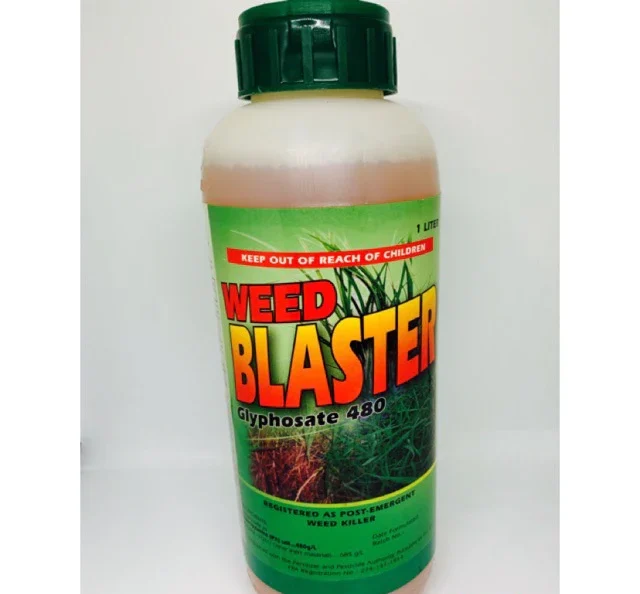
Weedblaster 480SL 1 Liter: Effective Weed Management for Agricultural Land
Introduction to Weedblaster 480SL 1 Liter
Weedblaster 480SL 1 Liter is an agricultural herbicide product designed for weed management in approved agricultural settings. For farmers, agricultural businesses, and agrochemical retailers, effective weed control is an important part of maintaining productive fields and managing farm operations. Weeds can compete with cultivated crops for water, nutrients, sunlight, and growing space, making appropriate weed management an essential consideration throughout the growing season.
In the Philippines, the Fertilizer and Pesticide Authority’s registered-product list identifies Weedblaster 480 SL as a glyphosate isopropylamine herbicide containing 480 g/L, formulated as a soluble liquid (SL). The listing includes post-emergence weed control in specified crops, including coffee, cacao, rubber, oil palm, citrus, coconut, sugarcane, and other listed uses. Always confirm the current registration and label for the specific product you purchase.
The one-litre packaging provides a convenient option for buyers who prefer to purchase agricultural inputs in smaller quantities. However, the correct product choice depends on the crop, weed species, location, and directions on the registered label.
What Is Weedblaster 480SL?
Weedblaster 480SL is a herbicide identify in the Philippine registration listing as containing glyphosate isopropylamine at a concentration of 480 grams per litre. Glyphosate is a systemic, post-emergence herbicide that is absorbed through susceptible plant foliage and transported within the plant. It is use to manage susceptible weeds when the product is apply according to its approve directions.
The term “480SL” describes the state concentration and formulation designation. “SL” generally refers to a soluble-liquid formulation. The one-litre pack identifies the volume of product in the container; it does not determine the correct application rate or the area that can be treated.
Farmers should check the product label for its registration number, manufacturer or registrant, approved crops, target weeds, application instructions, and safety precautions. These details are particularly important because herbicide registrations and permitted uses can differ between countries.
Importance of Weed Control in Agriculture
Weed control helps farmers reduce competition between unwanted plants and cultivate crops. When weeds grow uncheck, they may use valuable soil moisture and nutrients, shade young crops, interfere with field operations, and complicate harvesting.
In perennial crop systems such as coffee, cacao, rubber, oil palm, and citrus, managing vegetation around growing areas can be an important part of routine farm maintenance. In other agricultural settings, weed management may help prepare land for planting or support a reduced-tillage system, provided the chosen product is registered for that specific use.
The best approach depends on the weed species, crop growth stage, soil and weather conditions, and the farming system. Herbicides are only one part of integrated weed management, which may also include mulching, mechanical cultivation, cover crops, crop rotation, and monitoring of weed populations.
Potential Benefits of Weedblaster 480SL 1 Liter
When a product is register for the intended application and use according to its label, Weedblaster 480SL may provide a chemical weed-management option for eligible agricultural operations.
Key considerations for buyers include:
- Specified herbicide concentration: The register Philippine product listing identifies a glyphosate isopropylamine formulation at 480 g/L. <Cite refs={[“turn411446search23”]} />
- Post-emergence weed management: Its register use information identifies it as a post-emergence herbicide for listed applications.
- Convenient pack size: A one-litre container can be practical for handling, storage, inventory management, and purchase planning.
- Agricultural supply planning: Standardize packaging can help retailers and farm managers organize product stocks and compare available pack sizes.
- Support for farm maintenance: Where locally approve, herbicide use can be incorporated into a broader weed-management programme.
Actual performance depends on the weed species, environmental conditions, timing, application quality, and adherence to the product label. No herbicide should be assume to control every weed equally well.
How to Choose and Apply Weedblaster 480SL
Before purchasing Weedblaster 480SL 1 Liter, identify the weeds you need to manage and confirm that the product is approved for the intend crop or site. Read the complete label and follow the specified application rate, water volume, application timing, and any restrictions concerning weather or nearby vegetation.
Do not estimate the dosage base on the bottle size or copy instructions from another glyphosate product. Products with similar concentrations may have different labels, registrations, or permitted uses. Avoid spraying onto crop foliage or other desirable plants unless the label explicitly permits that application.
Use compatible, properly maintained application equipment and follow the manufacturer’s calibration instructions. Take precautions to prevent spray drift and accidental contamination of water sources, neighboring crops, gardens, and other sensitive areas. Do not apply before rain or during unsuitable weather if the label warns that these conditions may affect application or increase off-target movement.
For persistent or difficult-to-control weeds, seek advice from a qualified local agricultural professional. Repeated use of herbicides with the same mode of action can contribute to herbicide resistance, so integrated weed management and label-compliant resistance-management practices are important.
Safety, Storage, and Environmental Responsibility
Weedblaster 480SL should be handle as an agricultural chemical. Wear the protective clothing and personal protective equipment specify on the product label. Avoid contact with skin and eyes, and avoid inhaling spray mist. Do not eat, drink, or smoke while mixing or applying the product, and wash thoroughly after handling.
Keep the product in its original, clearly label container with the closure secure. Store it in a designated, secure chemical storage area, away from food, animal feed, children, and unauthorized persons. Follow the label’s storage and temperature requirements.
Prevent the product or spray mixture from entering drains, wells, ponds, streams, and other water bodies. Clean application equipment only as instructed, and manage leftover product and empty containers in accordance with the label and local regulations. Never reuse an agrochemical container for drinking water, food, or household storage.
Buying Weedblaster 480SL 1 Liter from an Agricultural Supplier
When sourcing Weedblaster 480SL 1 Liter, choose a reputable agricultural supplier that can provide the original packaging and reliable product information. Check the seal, label, registration details, batch identification, and expiry information where applicable. If any product detail is unclear, request confirmation from the supplier or registrant before purchase.
Farmers and retailers should also compare the product’s suitability for their intended application rather than relying solely on price or brand name. A registered local agrochemical dealer or agricultural extension professional can help confirm whether the product is appropriate for the crop and weeds concerned.
Conclusion
Weedblaster 480SL 1 Liter is an agricultural herbicide option listed in the Philippines as a glyphosate isopropylamine product containing 480 g/L, with approved post-emergence uses specify in the relevant registration information. Its suitability depends on local registration, the target weeds, the crop or site, and the exact product label.
For farmers, distributors, and agricultural retailers, accurate product identification and responsible handling are essential. By confirming the registered uses, following application and safety instructions, and integrating herbicides with other weed-management practices, agricultural professionals can make more informed decisions about managing weeds and maintaining their land.
Reviews
There are no reviews yet.