

Description
Onecide 1 Liter: Product Overview, Agricultural Uses, and Weed Management
Introduction to Onecide 1 Liter
Onecide 1 Liter is a product name that agricultural buyers may search for when looking for weed control solutions for crop production. Farmers, agrochemical retailers, and agricultural businesses rely on suitable weed management practices to protect crops from competition and maintain productive growing conditions. Selecting the right herbicide involve understanding the target weeds, identifying the crop, and confirming that the product is register for the intended application.
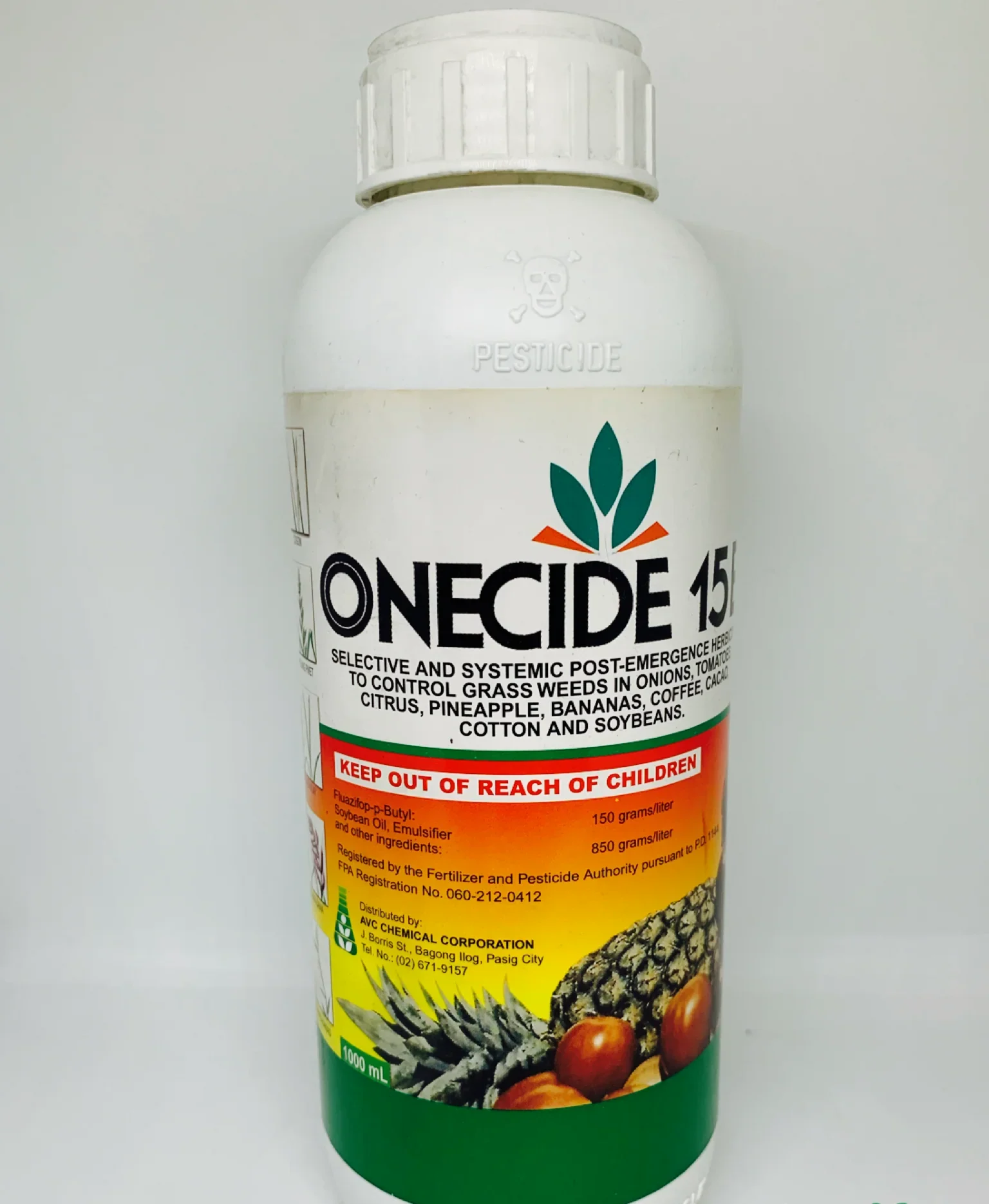
One product identified in agricultural registration information is Onecide 15 EC, a selective, systemic, post-emergence herbicide containing fluazifop-P-butyl at 150 grams per litre. The Philippine Fertilizer and Pesticide Authority’s publish registration list has associated this product with grass weed control in specified crops. However, a one-litre package description alone does not confirm that every product sold as Onecide has the same formulation or registration status. Buyers should check the original product label and current local registration before purchasing or using it.
Weed management is an important part of crop care because unwanted plants can compete with cultivated crops for water, nutrients, sunlight, and space. Using an appropriate herbicide as part of an integrated weed management programme may help farmers manage susceptible weeds while supporting routine farm operations.
What Is Onecide 1 Liter?
Onecide is a name associated with herbicide products in certain agricultural markets. The specific product Onecide 15 EC is identify in the Philippine registration listing as a selective, systemic, post-emergence herbicide with fluazifop-P-butyl as its active ingredient. Its listed uses include controlling specified grass weeds in crops such as soybean, tomato, and cassava. Approved uses must always be checked against the latest local label.
A selective herbicide is intended to control particular types of weeds while being suitable for certain labelled crops when use correctly. A systemic herbicide can move within a susceptible plant after absorption. A post-emergence herbicide is applied after the target weeds have emerged.
These terms help explain the product category, but they do not mean that Onecide can control every weed or be used safely on every crop. In particular, buyers should not assume that a product formulated to control grass weeds will also control broadleaf weeds or sedges.
The term “1 Liter” refers to the package volume. It does not establish the concentration, application rate, coverage area, or number of applications permitted. Those details depend on the exact formulation and its registered instructions.
Why Weed Control Is Important for Farmers
Weeds are a common challenge in crop production. They compete with cultivated plants for resources and may interfere with field maintenance, irrigation, fertiliser application, and harvesting. Heavy weed growth can also increase the labour required to maintain fields and make crop management more difficult.
Different weed species require different management strategies. Annual grasses may emerge rapidly during favourable growing conditions, while perennial grasses can regrow from underground structures. Broadleaf weeds and sedges have different growth characteristics and may require different control methods.
For this reason, farmers should identify the weeds present in their fields before selecting a herbicide. Where a product such as Onecide 15 EC is register for the crop and target weeds, it may be considered as one component of a suitable weed management programme. Correct identification and label compliance are essential to avoid ineffective treatment or damage to desirable plants.
Potential Benefits of Onecide 1 Liter
When the specific product is correctly identify and use according to its register label, it may offer practical advantages for eligible agricultural applications.
- Targeted weed management: The register Onecide 15 EC formulation is associated with the control of specified grass weeds in approved crops.
- Convenient packaging: A one-litre container can be useful for stock management and purchase planning, depending on the farm’s needs.
- Support for crop maintenance: Appropriate weed control can help reduce competition between susceptible weeds and cultivated plants.
- Practical inventory management: Standard package sizes can help agricultural retailers and farm managers organize their supplies.
- Integration with other methods: Herbicide use can be combine with mechanical weeding, mulching, crop rotation, and regular field monitoring.
Actual results depend on the product formulation, weed species, weed growth stage, weather conditions, application quality, and other factors. No product should be promoted as universally effective without evidence supporting that claim.
How to Choose and Use Onecide Correctly
Before purchasing Onecide 1 Liter, confirm the full product name, active ingredient, concentration, manufacturer or registrant, and registration number. Check that the intended crop and target weeds appear on the locally approved label.
Follow the exact directions provided with the product. Do not calculate the dosage base on the one-litre container size or copy instructions from another herbicide. Products with similar names can have different formulations and approved uses, and the same product name may not be register for identical uses in every country.
Use compatible, properly maintaine application equipment and follow the label’s instructions for preparation, calibration, application timing, and cleaning. Avoid spraying when weather conditions could increase drift or cause the product to reach desirable plants. Never apply the product to an unlisted crop or site.
If weeds are difficult to identify or have not responded to previous treatments, seek advice from a qualified local agricultural professional. An adviser can help determine whether the problem involves incorrect weed identification, unsuitable timing, poor application, or possible herbicide resistance.
Safety, Storage, and Environmental Protection
Onecide should be handle as an agricultural chemical, following the precautions on the exact product label. Wear the specified protective clothing and personal protective equipment. Avoid contact with skin and eyes, and do not inhale spray mist. Do not eat, drink, or smoke while handling or applying the product, and wash thoroughly after use.
Keep the herbicide in its original, labelle container with the cap securely closed. Store it in a designated, secure area away from food, animal feed, children, and unauthorize persons. Follow the manufacturer’s storage requirements and local regulations.
Prevent spills and spray mixtures from reaching drains, ponds, rivers, wells, and other water sources. Clean application equipment and dispose of leftover product and empty containers according to the label and applicable environmental requirements. Never reuse pesticide containers for food, drinking water, or household storage.
Buying Onecide 1 Liter from a Reliable Agricultural Supplier
When purchasing Onecide 1 Liter, select a reputable agricultural supplier that can provide genuine packaging and accurate product information. Examine the seal, ingredient statement, registration details, batch identification, and expiry information where applicable. Request confirmation from the supplier if the active ingredient or intended use is unclear.
Compare products based on their verifY specifications, suitability for the target weeds, local registration, and total cost—not just the package price. Agricultural buyers should also consider whether the product is appropriate for their crop and weed management plan.
For online retailers, a useful product listing should include clear product photographs, the verified formulation, package size, manufacturer or registrant, registration information, and a reminder to follow the approved label. Accurate descriptions help customers understand what they are buying and avoid confusing products with similar names.
Conclusion
Onecide 1 Liter is a search term for an agricultural herbicide product, but the exact formulation must be verified before making specific claims about its use. Onecide 15 EC is identified in Philippine registration information as a fluazifop-P-butyl herbicide for specified grass weeds and approved crops. Its suitability depends on the exact product, current local registration, and label directions.
For farmers, retailers, and agricultural businesses, effective weed management begins with accurate product identification, careful selection, responsible application, and appropriate safety measures. By verifying the product label and incorporating suitable herbicides into an integrated weed management strategy, agricultural professionals can make better-informed decisions about crop care and field maintenance.
Reviews
There are no reviews yet.