

Description
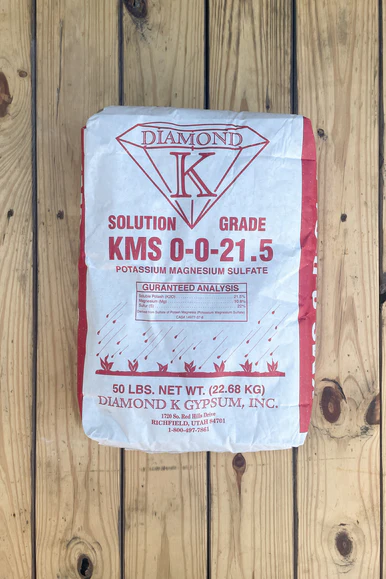
DTE Solution Grade Langbeinite (0-0-21.5):
A Natural Source of Potassium, Magnesium, and Sulfur Modern agriculture depends on balanced plant nutrition to produce healthy crops, improve crop quality, and maintain productive soils. While nitrogen, phosphorus, and potassium are commonly recognized as the primary macronutrients, plants also require secondary nutrients such as magnesium and sulfur . DTE Solution Grade Langbeinite (0-0-21.5) is a specialty fertilizer that can help provide potassium while also supplying magnesium and sulfur. Its combination of nutrients makes langbeinite an interesting option for growers looking for a multi-nutrient fertilizer for crop and soil management.
What Is DTE Solution Grade Langbeinite?
Down To Earth Fertilizer Solution Grade Langbeinite is a fertilizer based on langbeinite , a naturally occurring mineral containing potassium, magnesium, and sulfur. The product’s listed 0-0-21.5 analysis indicates that it is primarily a potassium fertilizer, with the 21.5 representing its stated potash content. Unlike conventional fertilizers that focus on supplying only one major nutrient, langbeinite can provide several important nutrients in one material. The combination of potassium, magnesium, and sulfur makes langbeinite particularly relevant for crops with significant secondary nutrient requirements. It can be incorporated into a comprehensive fertility program based on soil testing and crop-specific nutrient recommendations.
Understanding the 0-0-21.5 Fertilizer Analysis
The numbers on a fertilizer label represent its nutrient analysis. In a 0-0-21.5 fertilizer , the first number represents nitrogen, the second represents available phosphate, and the third represents soluble potash. Therefore, DTE Solution Grade Langbeinite 0-0-21.5 is not intended to be a major source of nitrogen or phosphorus. Its principal labeled macronutrient is potassium. However, the value of langbeinite goes beyond its primary fertilizer-grade number. The mineral also contains magnesium and sulfur , two essential nutrients that are often important for plant development. This makes langbeinite different from a simple potassium-only fertilizer. When growers need potassium and also need magnesium and sulfur, a multi-nutrient source can potentially simplify fertilizer planning.
Importance of Potassium for Plants
Potassium is one of the three primary macronutrients required by plants. It plays a role in numerous physiological processes, including water regulation, enzyme activation, photosynthesis-related processes, and carbohydrate movement. Adequate potassium nutrition can support strong plant growth and help crops respond to environmental stresses. Potassium is also associated with crop quality and the efficient movement of water and nutrients throughout the plant. A deficiency of potassium may result in symptoms such as weak growth, marginal leaf discoloration, and reduced plant performance, although deficiency symptoms vary among crop species. Because potassium requirements differ between crops and soils, fertilizer applications should be based on soil tests, crop needs, yield goals, and professional agronomic recommendations.
Magnesium: An Essential Secondary Nutrient
One of the important advantages of langbeinite is that it provides magnesium in addition to potassium. Magnesium is a central component of chlorophyll, the pigment responsible for the green color of plants and a critical part of photosynthesis. Magnesium also participates in enzyme activation and other plant metabolic processes. When magnesium availability is inadequate, plants can experience reduced photosynthetic performance and characteristic leaf symptoms. For crops grown on soils with low magnesium levels, a fertilizer supplying both potassium and magnesium may be useful. However, not every crop or soil requires additional magnesium, which reinforces the importance of soil testing before fertilizer application.
The Role of Sulfur in Crop Nutrition
Sulfur is another important nutrient supplied by langbeinite. Plants use sulfur in the formation of certain amino acids and proteins, as well as in various biochemical processes. Sulfur nutrition can be especially important in modern agriculture because changes in atmospheric emissions and fertilizer practices have reduced some historical sources of sulfur deposition in certain regions. As a result, sulfur deficiencies can occur in soils where sulfur availability is insufficient for crop demand. A fertilizer that combines potassium, magnesium, and sulfur can therefore address multiple nutrient requirements simultaneously when soil and crop conditions indicate a need.
Benefits of DTE Solution Grade Langbeinite
DTE Solution Grade Langbeinite can offer several potential benefits as part of a balanced fertility program:
- Supplies a significant source of potassium.
- Provides magnesium for plant nutrition.
- Supplies sulfur as an additional secondary nutrient.
- Combines multiple nutrients in a single fertilizer material.
- Can be useful where soils require potassium, magnesium, and sulfur.
- Offers a targeted alternative to applying several individual nutrient sources.
The actual agronomic benefit depends on soil fertility, crop type, application rate, weather, and other factors.
Langbeinite and Balanced Fertilizer Management
Although langbeinite supplies several important nutrients, it should not automatically be considered a complete fertilizer. Its 0-0-21.5 analysis means it does not provide significant labeled nitrogen or phosphorus. Many crops require nitrogen and phosphorus in addition to potassium, magnesium, and sulfur. A complete crop nutrition plan may therefore require several fertilizer sources. The best approach is to begin with a soil test. Soil testing can identify nutrient deficiencies and help prevent unnecessary applications. Growers can then select fertilizer products that provide the nutrients their crops actually need.
Solution Grade and Agricultural Applications
The term solution grade generally indicates that a fertilizer is suitable for use in systems where fertilizer is dissolved into a solution, subject to the product’s specifications and application instructions. This characteristic can be important for growers using specialized nutrient-delivery systems. Fertigation and other solution-based fertilizer applications require careful attention to compatibility, water quality, concentration, equipment, and product directions. Growers should always verify that a specific fertilizer is appropriate for their application system before use.
Sustainable Nutrient Management
Efficient fertilizer management is increasingly important in modern agriculture. Applying nutrients according to crop requirements can help improve fertilizer-use efficiency and reduce unnecessary nutrient applications. Langbeinite can contribute to this approach when soil testing indicates that potassium, magnesium, and sulfur are required. Instead of applying these nutrients independently, a multi-nutrient fertilizer can provide several of them simultaneously. However, responsible fertilization requires more than choosing a product. Application timing, rate, placement, irrigation, soil conditions, crop uptake, and weather all influence nutrient efficiency.
Conclusion
DTE Solution Grade Langbeinite (0-0-21.5) is a multi-nutrient fertilizer based on the mineral langbeinite. Its primary labeled nutrient is potassium, while its natural mineral composition also makes it a source of magnesium and sulfur . This combination can make langbeinite a useful fertilizer option for crops and soils requiring multiple nutrients. Potassium supports water regulation, enzyme activity, and overall plant development. Magnesium is essential for chlorophyll and photosynthesis, while sulfur contributes to amino acid formation and other biological processes.
Providing these nutrients together can be advantageous when soil and crop requirements call for them. For growers searching for DTE Solution Grade Langbeinite, 0-0-21.5 fertilizer, langbeinite fertilizer, potassium magnesium sulfur fertilizer, potassium fertilizer, magnesium fertilizer, sulfur fertilizer, and multi-nutrient crop fertilizer , understanding the product’s nutrient profile is an important first step. When incorporated into a soil-test-based fertility program and used according to current product directions, langbeinite can be a valuable tool for maintaining balanced crop nutrition and supporting healthy plant development.
Reviews
There are no reviews yet.