

Description
Funguran 1KG: Copper-Based Fungicide for Agricultural Crop Protection
Introduction to Funguran 1KG
Funguran 1KG is an agricultural crop protection product associated with fungicide use and plant disease management. Fungicides are important tools in farming because plant diseases can affect crop growth, reduce the quality of harvested produce, and lead to economic losses. By selecting suitable crop protection products and following recommended agricultural practices, farmers can help maintain plant health and improve the management of disease risks.
Funguran is a product name associated with copper-based fungicide formulations in certain markets. However, the exact active ingredient, concentration, formulation, and register uses of Funguran 1KG should be confirm from the specific product label before purchase or application. Product formulations and approved uses may differ by country and product version.
The 1-kilogram packaging may be suitable for agricultural customers who need a larger quantity than small retail packs. The actual amount required for a field or crop depends on the product’s approved application rate, the crop being treated, the target disease, and the directions provided by the manufacturer.
For farmers, agricultural retailers, and commercial growers, understanding a product’s verified specifications is essential for choosing the right crop protection solution.
What Is Funguran?
Funguran is a trade name associate with copper-base plant protection products in some agricultural markets. Copper fungicides are generally use as protective treatments against certain plant diseases, including some fungal and bacterial diseases, when the specific product is registered for those purposes.
Copper-based fungicides typically work through contact activity. They form a protective deposit on treated plant surfaces, where copper compounds can interfere with important processes in susceptible microorganisms. Because these products generally do not move extensively throughout the plant, adequate coverage of the target plant surfaces is an important part of proper application.
The exact mode of action, active ingredient, and performance characteristics of Funguran 1KG depend on its formulation. Customers should check the package to establish whether their product contains copper hydroxide or another copper compound, as well as the concentration and formulation type.
It is important not to assume that every product carrying a similar brand name has identical specifications or is approved for the same crops and diseases.
Key Features of Funguran 1KG
1. Agricultural Disease Management
Copper-based fungicides are use in various crop protection programs to help manage certain plant diseases. Depending on the registered product and crop, these treatments may be use against selected fungal or bacterial pathogens.
Growers should consult the official Funguran label to determine the exact diseases target by the product. Correct disease identification is important because symptoms such as leaf spots, yellowing, wilting, and plant decay may result from different causes.
2. Protective Contact Activity
Many copper fungicides act primarily on plant surfaces rather than moving throughout plant tissues. This makes application timing and coverage important considerations.
The product label provide the appropriate application method, rate, timing, and any restrictions related to weather or crop growth. Rainfall, new plant growth, and environmental conditions can influence how long a protective deposit remains effective.
3. Convenient 1KG Packaging
The 1-kilogram pack size may be convenient for farms, agricultural businesses, and growers who require more product than a small household or garden package provides.
However, package size alone does not determine the treatment area. The amount needed depends on the registered application rate and the specific crop protection requirements. Always measure and apply the product according to its label rather than estimating the quantity.
4. Compatibility with Integrated Crop Protection
Fungicides work best when they are incorporated into a broader crop disease management program. Regular field inspections, appropriate irrigation, good crop spacing, sanitation, and removal of infected plant material where recommended can help reduce disease pressure.
Where suitable, resistant crop varieties and crop rotation may also support disease management. These practices can reduce reliance on repeat chemical treatments and help farmers respond more effectively to changing field conditions.
Agricultural Applications of Funguran
Copper-based fungicides may be register for select vegetable crops, fruit crops, and other agricultural plants. Their approve uses depend on the specific active ingredient, concentration, formulation, and local pesticide registration.
Funguran 1KG should only be use on crops and against diseases expressly listed on its official label. Do not assume that a product approve for one crop is automatically suitable for another.
Before applying a fungicide, growers should determine whether the problem is cause by a susceptible pathogen. Similar symptoms may result from nutrient deficiencies, unsuitable soil conditions, insect damage, bacteria, viruses, or environmental stress. If the cause is unclear, consulting an agricultural extension officer or qualified crop adviser can help prevent unnecessary or ineffective treatment.
Benefits of Responsible Fungicide Use
Supporting Crop Quality
Plant diseases can affect leaves, stems, flowers, and harvested produce. When a suitable, register fungicide is applied correctly, it may help reduce damage cause by the target disease and support the production of healthy crops.
The level of protection depends on several factors, including disease pressure, crop condition, application timing, and environmental conditions. Fungicides should not be regarded as a guarantee against all plant diseases.
Improving Crop Protection Planning
A structure disease management plan helps farmers monitor crop conditions and determine when intervention may be necessary. Keeping records of field observations, product applications, weather conditions, and crop performance can support better decision-making throughout the growing season.
Supporting Integrated Disease Management
Responsible crop protection combines appropriate chemical treatments with preventive agricultural practices. Growers should avoid unnecessary applications and follow any label restrictions on application frequency.
If fungicide resistance management is relevant to the product and target pathogen, farmers should follow professional recommendations concerning the use of different modes of action. Copper products should also be used carefully because excessive or repeated copper applications can contribute to copper accumulation in soil.
Directions for Use and Application Precautions
Before using Funguran 1KG, read the complete product label and confirm the approved crop, target disease, dosage, mixing procedure, application method, treatment interval, maximum number of applications, and any pre-harvest or re-entry restrictions.
Because the exact formulation of Funguran 1KG has not been verified here, a specific dosage or mixing rate should not be assumed. Do not substitute instructions from another copper fungicide or a product with a similar brand name.
Use appropriate application equipment and the personal protective equipment specified on the label. Avoid spraying during unsuitable weather conditions, prevent spray drift, and follow any restrictions designed to protect nearby crops, people, animals, and sensitive environments.
Do not mix Funguran with other fungicides, fertilizers, or agricultural chemicals unless the product label or a qualified professional confirms that the combination is appropriate. Some copper formulations may cause crop injury under certain conditions or when mixed with incompatible products.
Safe Handling, Storage, and Environmental Protection
Agricultural fungicides require careful handling. Wear the protective equipment specified by the manufacturer, which may include gloves, protective clothing, eye protection, and respiratory protection where required. Avoid inhaling dust or spray mist and prevent direct contact with the product.
Store Funguran 1KG in its original, properly labeled container in a secure, dry location, following the manufacturer’s storage requirements. Keep it away from children, pets, food, animal feed, and drinking water.
Prevent product residues, spray mixtures, and cleaning water from entering drains, rivers, ponds, or other water sources. Copper can be harmful to aquatic organisms, so preventing runoff and spray drift is particularly important. Dispose of unused product and empty packaging according to the label and local regulations. Never reuse pesticide containers for household purposes.
Choosing Funguran 1KG from a Reliable Supplier
When purchasing Funguran 1KG, select a reputable agricultural supplier that can provide properly labeled packaging and reliable product information. Check the active ingredient, concentration, formulation, registration details, manufacturer, batch number, and expiration information where applicable.
Buyers should ensure that the product is suitable for their crop and location before making a purchase. Verifying the label helps reduce the risk of using an inappropriate formulation or applying a product outside its registered uses.
Conclusion
Funguran 1KG is associated with agricultural fungicide use and, in certain markets, copper-based crop protection formulations. Its exact composition, approved crops, and target diseases must be confirmed from the official product label. When used appropriately, a registered copper fungicide can form part of a broader plant disease management strategy.
For farmers and agricultural businesses, the best approach combines accurate disease identification, correct product selection, label-compliant application, safe storage, and responsible environmental practices. These measures help support effective crop protection while reducing unnecessary pesticide use and potential harm to people, crops, and the environment.
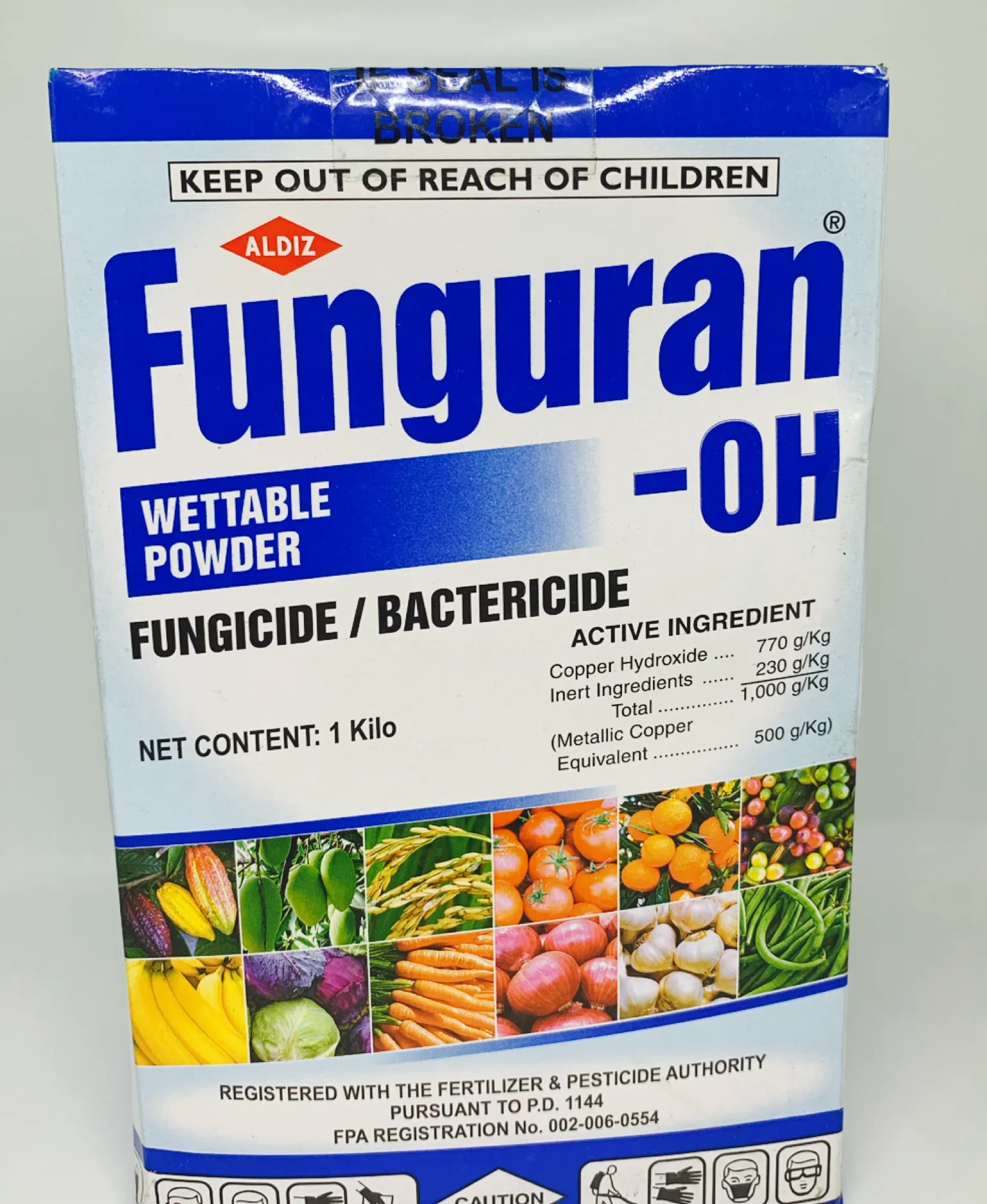
Wettable Powder Fungicide/ Bactericide Directions for Use Apply Funguran-OH at the following recommended rates per 16 liters of water. Mix the required amount of Funguran-OH into a little water to make a slurry and then pour the concentrated suspension into a measured quantity of water in the spray tank and stir vigorously. Spray 7 to 14 days interval depending on disease severity. Compatibility Funguran-OH is compatiblie with most insecticides and fungicides. However it should not be used with synthetic pyrethoid based insecticides.
| Crops | Diseases | Recommended Rates (tbsp/ 16L) |
| Rice | Rice Blast, Sheath Blight, Bacterial Leaf Streak | 2.0-5.0 |
| Mango | Anthracnose | 2.-6.0 |
| Cacao | Black Pod | 2.0-6.0 |
| Coffee | Leaf rust, Coffee Berry Disease | 2.0-6.0 |
| Citrus | Melanose, Scab, Canker, Fruit Rot, Brown and Black Spot | 2.0-6.0 |
| Tomatoes | Early Blight Fruit rot, Downy, Mildew, Septoria | 2.0-6.0 |
| Cabbage | Black Rot, Black Leaf Spot | 2.0-6.0 |
| Carrot | Carrot Blight | 2.0-6.0 |
| Onion | Purple Blotch | 2.0-6.0 |
| Garlic | Downy Mildew | 2.0-6.0 |
| Beans | Rust, Bacterial Blight | 2.0-6.0 |
| Banana | Sigatoka, Bacterial Fruit Rot, Finger rot, corm Rot | 2.0-6.0 |
Active Ingredient: Copper Hydroxide 770g/kg Inert Ingredients 230g/kg Metal Copper Equivalent 500g.kg
Reviews
There are no reviews yet.