


Description
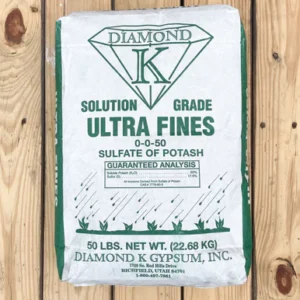
Potassium Sulfate Granular (SOP) (0-0-50 + S17%) – 50 lb Bag: Benefits, Uses, and Complete Fertilizer Guide
Healthy plants and productive crops require a balanced supply of essential nutrients throughout the growing season. Among these nutrients, potassium and sulfur play important roles in plant development, nutrient metabolism, water regulation, and crop quality. Potassium Sulfate Granular (SOP) (0-0-50 + S17%) – 50 lb Bag is a fertilizer option for farmers, gardeners, landscapers, and commercial growers seeking to supply potassium and sulfur without adding nitrogen or phosphorus. Potassium sulfate, commonly known as SOP or sulfate of potash, is valued for its potassium content and sulfur contribution. Its granular form can make it suitable for a variety of soil-based agricultural and horticultural applications, depending on the product specifications and application method.
With a labeled analysis of 0-0-50 + 17% sulfur, this fertilizer is designed to supply potassium as its primary nutrient while also providing sulfur for crops that need it. Whether you grow fruits, vegetables, field crops, ornamental plants, or specialty crops, understanding the benefits and proper application of potassium sulfate can help you develop a more effective nutrient management plan. This guide explains the fertilizer analysis, potential applications, advantages, and important considerations when using granular SOP fertilizer.
What Is Potassium Sulfate Granular (SOP)?
Potassium Sulfate Granular (SOP) is a potassium fertilizer that supplies potassium and sulfur in the form of potassium sulfate. SOP stands for sulfate of potash, a widely recognized fertilizer source used in agricultural and horticultural production. Unlike potassium chloride fertilizers, potassium sulfate does not supply chloride as its intended nutrient component. This characteristic makes it a useful option for growers managing chloride-sensitive crops or seeking a potassium source with a low chloride contribution. The actual chloride specification should always be verified using the supplier’s product documentation.
The granular formulation can support convenient handling, storage, and application with suitable fertilizer-spreading equipment. It may be used in soil fertility programs where potassium and sulfur are required, provided the product label and crop recommendations support the intended application. The 50 lb bag is a practical package size for many farms, gardens, landscaping projects, and commercial growing operations. The appropriate quantity depends on soil nutrient levels, crop requirements, and the recommended application rate.
Understanding the 0-0-50 + S17% Fertilizer Analysis
The fertilizer grade identifies the major nutrients supplied by the product.
-
- 0% nitrogen (N): The fertilizer does not provide a significant labeled nitrogen contribution.
-
- 0% available phosphate (P₂O₅): The product does not provide a significant labeled phosphate contribution.
-
- 50% soluble potash (K₂O): Supplies a concentrated source of potassium, expressed as potassium oxide equivalent under conventional fertilizer labeling.
-
- 17% sulfur (S): Provides sulfur, an essential plant nutrient involved in protein synthesis and other metabolic processes.
This nutrient combination makes granular SOP fertilizer suitable for targeted nutrient management when crops need potassium and sulfur but do not require additional nitrogen or phosphorus from the same product. Potassium sulfate should not automatically be considered a complete fertilizer. Plants also require nitrogen, phosphorus, calcium, magnesium, and micronutrients. Soil testing and crop-specific recommendations can help determine whether other fertilizers or amendments are necessary.
Benefits of Potassium Sulfate Granular Fertilizer
Potassium sulfate is used in a wide range of crop nutrition programs because it combines potassium with sulfur in one fertilizer.
1. Supports Healthy Plant Growth
Potassium helps regulate water movement within plants and activates enzymes involved in essential physiological processes. It also supports photosynthesis and the movement of sugars from leaves to other plant tissues. Providing adequate potassium can help plants maintain normal growth and development when soil potassium is insufficient.
2. Supplies Essential Sulfur
Sulfur is necessary for the formation of certain amino acids, proteins, and enzymes. It contributes to chlorophyll formation indirectly through its role in plant metabolism and supports normal growth. A fertilizer containing 17% sulfur can help address sulfur requirements when soil testing or crop recommendations indicate a need.
3. Provides a Potassium Source Without Added Nitrogen
Some crops require additional potassium during particular growth stages without needing more nitrogen. Potassium sulfate allows growers to supply potassium while avoiding a significant nitrogen contribution from this fertilizer. This can be helpful when managing fruit development, crop maturity, or overall nutrient balance, depending on the crop and growing conditions.
4. Offers a Low-Chloride Alternative
Potassium sulfate is often selected as an alternative to potassium chloride when chloride sensitivity is a concern. This can be particularly relevant for crops or growing systems where chloride management is important. However, growers should consider the full irrigation-water chemistry, soil conditions, and product specifications rather than assuming every application is automatically suitable for every crop.
5. Supports Targeted Fertilizer Management
The concentrated potassium analysis helps growers calculate fertilizer quantities based on crop requirements. Granular SOP can be incorporated into a nutrient management program using appropriate spreading or placement methods specified by the manufacturer.
Why Potassium Is Important for Plants
Potassium is one of the three primary macronutrients required by plants. Although it is not a structural component of most plant molecules, it plays a central role in regulating many physiological processes. Potassium helps plants manage water movement through their tissues, supports enzyme activation, and contributes to the opening and closing of stomata. These tiny openings regulate gas exchange and water loss through transpiration. Adequate potassium nutrition also supports photosynthesis and the transport of sugars produced by leaves. These sugars supply energy and carbon for growth, fruit development, and other biological functions. When potassium is deficient, plants may develop symptoms such as yellowing or browning along leaf edges, weak growth, or reduced crop quality. However, similar symptoms can result from other problems, so soil or tissue testing is useful before applying additional fertilizer.
The Role of Sulfur in Crop Nutrition
Sulfur is an essential secondary macronutrient required for normal plant growth. It is involved in the production of sulfur-containing amino acids, which are building blocks of proteins. Sulfur also contributes to enzyme activity and other metabolic processes. Crops with inadequate sulfur may show pale leaves, reduced growth, and lower productivity. Because sulfur deficiency can resemble nitrogen deficiency, laboratory testing can help identify the actual nutrient limitation. The 17% sulfur content in Potassium Sulfate Granular SOP makes the product a potential option for growers who need both potassium and sulfur. Its value depends on whether the crop requires these nutrients and whether the application rate meets the crop’s needs without creating an imbalance.
Potassium Sulfate for Fruits and Vegetables
Fruit and vegetable crops need sufficient potassium for water regulation, enzyme activity, and normal development. Potassium is particularly important in many fruiting crops, although the amount required varies by species, yield goals, soil type, and growth stage. Crops such as tomatoes, peppers, potatoes, berries, and various fruit trees may benefit from an appropriate potassium supply when soil levels are insufficient. Sulfur requirements also vary among crops and production systems. Potassium sulfate can be considered in these production systems when a soil test or crop recommendation supports its use. Growers should avoid applying it solely because a crop is fruiting; the correct rate depends on nutrient availability and expected crop removal. For high-value crops, careful nutrient planning can help prevent deficiencies while reducing unnecessary fertilizer expenses and environmental losses.
Potassium Sulfate for Chloride-Sensitive Crops
Some crops are sensitive to excessive chloride in their root environment. Because potassium sulfate supplies potassium without using chloride as its accompanying nutrient, it is often considered for these production systems. The suitability of SOP depends on crop sensitivity, soil characteristics, irrigation-water quality, and the nutrient composition of the product. In saline environments, overall salt management is particularly important, because potassium sulfate itself contributes soluble salts. Growers should review soil tests, irrigation-water analyses, and crop-specific fertilizer recommendations before choosing a potassium source.
How to Apply Potassium Sulfate Granular (0-0-50 + S17%)
Correct fertilizer application improves nutrient management and helps minimize unnecessary losses. Before using the 50 lb bag, consult the current manufacturer label.
-
- Test the soil. Determine whether potassium and sulfur are needed and identify any existing nutrient imbalances.
-
- Calculate the required rate. Use crop recommendations and the product label to determine how much fertilizer to apply.
-
- Select an appropriate application method. Use a suitable spreading or placement method according to the manufacturer’s instructions.
-
- Consider crop timing. Match fertilizer applications to crop nutrient demand and the recommended management schedule.
-
- Avoid overapplication. Excessive fertilizer can contribute to salinity issues, nutrient imbalance, and unnecessary costs.
-
- Store the product properly. Keep the fertilizer in suitable storage conditions and follow the manufacturer’s handling instructions.
Do not assume that the same application rate is suitable for every crop or soil type. For large-scale operations, consult a qualified agronomist or follow locally accepted crop nutrient recommendations.
Why Choose a 50 lb Bag of Granular SOP Fertilizer?
The 50 lb bag of Potassium Sulfate Granular (0-0-50 + S17%) offers a practical quantity for growers who need a concentrated potassium and sulfur fertilizer for routine crop nutrition. Granular fertilizer can be convenient for handling and distribution with compatible equipment. The 50 lb size may suit smaller farms, larger gardens, specialty crop production, and commercial operations that require manageable quantities of fertilizer. When comparing products, evaluate the guaranteed analysis, granule characteristics, solubility, chloride specifications, intended applications, and cost per unit of nutrient. These factors can help determine whether granular SOP is the right choice for your growing system.
Responsible Fertilizer Management
Although potassium and sulfur are essential nutrients, fertilizer should be applied according to actual crop requirements. Excessive applications can waste money, increase soluble salt concentrations, and contribute to nutrient imbalances. Soil testing, accurate fertilizer calculations, appropriate placement, and monitoring crop response are important elements of responsible nutrient management. Growers should also consider nutrients supplied by irrigation water, compost, manure, and previous fertilizer applications. A balanced approach can help maintain productive soil conditions while reducing unnecessary fertilizer use.
Conclusion
Potassium Sulfate Granular (SOP) (0-0-50 + S17%) – 50 lb Bag is a concentrated potassium and sulfur fertilizer designed for growers who need these essential nutrients without adding significant labeled nitrogen or phosphorus. Its 50% soluble potash analysis supplies potassium for water regulation, enzyme activation, photosynthesis, and normal crop development, while its 17% sulfur content contributes to protein synthesis and essential plant metabolism. The granular formulation can be convenient for suitable soil-based agricultural and horticultural applications. Potassium sulfate is also valued as a potassium source that does not use chloride as its accompanying nutrient, making it a potential choice for chloride-sensitive crops when supported by soil and crop recommendations.
For farmers, gardeners, and commercial growers searching for Potassium Sulfate Granular SOP, sulfate of potash 0-0-50, potassium sulfate fertilizer 50 lb bag, granular SOP fertilizer, potassium fertilizer with sulfur, low-chloride potassium fertilizer, and potassium sulfate for fruits and vegetables , understanding the nutrient analysis and correct application is essential. By combining soil testing, accurate fertilizer calculations, and crop-specific nutrient management, growers can determine whether Potassium Sulfate Granular SOP is an appropriate addition to their fertilizer program. Responsible use helps support healthy plant growth, efficient nutrient management, and productive growing environments.

Reviews
There are no reviews yet.