

Description
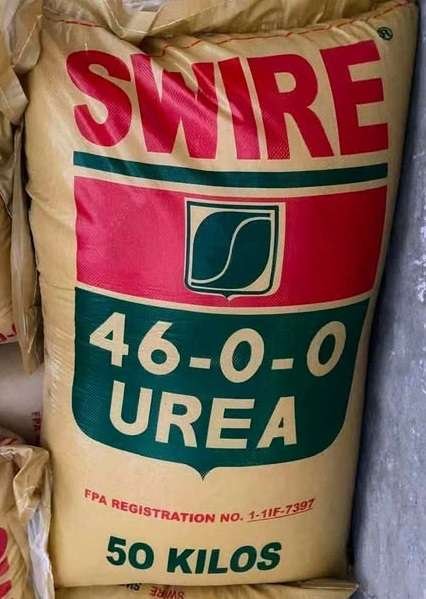
Swire Urea 46-0-0 Fertilizer: A Powerful Nitrogen Source for Healthy Crop Growth and Higher Agricultural Productivity
Introduction to Swire Urea 46-0-0 Fertilizer
Agriculture plays an essential role in food production, economic development, and livelihood support for farming communities. To achieve healthy crop growth and productive harvests, farmers need to provide plants with the nutrients required throughout their growing cycle. Among these nutrients, nitrogen is particularly important because it supports leaf development, chlorophyll production, protein formation, and overall plant growth. Swire Urea 46-0-0 Fertilizer is a nitrogen-rich fertilizer that can help address crop nitrogen requirements when applied correctly and according to soil conditions.
Swire Urea 46-0-0 Fertilizer is identified by its NPK grade of 46-0-0, meaning it contains 46% nitrogen and no declared phosphorus or potassium. This high nitrogen concentration makes urea a widely used fertilizer option in agricultural nutrient management. Farmers, agricultural businesses, and fertilizer distributors often consider urea when planning nutrient applications for crops that require additional nitrogen.
Understanding the characteristics, benefits, application methods, and proper handling of Swire Urea 46-0-0 Fertilizer can help agricultural users make informed decisions. With appropriate application rates and effective crop management, nitrogen fertilizer can contribute to healthy plant development and improved nutrient-use efficiency.
What Is Swire Urea 46-0-0 Fertilizer?
Urea is a concentrated nitrogen fertilizer with the chemical formula CO(NH₂)₂. It is commonly used in agriculture because of its high nitrogen content, which allows farmers to supply substantial amounts of nitrogen without applying excessive quantities of fertilizer material.
The product name Swire Urea 46-0-0 Fertilizer refers to a fertilizer grade containing 46% nitrogen, with zero declared phosphate and potash in its NPK analysis. The actual product specifications, physical form, packaging, and intended uses should always be verified against the manufacturer’s label and supplier documentation.
Once applied to soil, urea undergoes chemical and biological transformations that convert its nitrogen into forms plants can absorb. Soil moisture, temperature, pH, placement, and microbial activity influence these processes. Because nitrogen can be lost through ammonia volatilization, leaching, or other pathways, proper fertilizer management is essential for achieving good results.
For farmers seeking a concentrated nitrogen source, Swire Urea 46-0-0 Fertilizer may be considered as part of a balanced and carefully planned crop nutrition program.
Key Benefits of Swire Urea 46-0-0 Fertilizer
1. High Nitrogen Concentration
One of the main advantages of urea fertilizer is its high nitrogen concentration. At 46% nitrogen, every kilogram of fertilizer contains approximately 460 grams of nitrogen. This makes nutrient calculations straightforward and allows agricultural users to plan fertilizer applications according to crop requirements.
For example, 100 kilograms of urea containing 46% nitrogen supplies approximately 46 kilograms of nitrogen. Actual field application rates must still be based on soil tests, crop nutrient requirements, expected yield, and local agricultural recommendations.
2. Supports Healthy Leaf and Stem Development
Nitrogen is essential for the production of chlorophyll, the pigment responsible for capturing sunlight during photosynthesis. It also contributes to the formation of amino acids, proteins, enzymes, and other compounds necessary for plant development.
When crops receive adequate nitrogen, they can develop healthier foliage and stronger vegetative growth, provided that water, sunlight, and other nutrients are sufficient. Nitrogen deficiency may cause yellowing of older leaves, reduced plant growth, and lower productivity.
Swire Urea 46-0-0 Fertilizer can help correct nitrogen deficiency when soil testing or crop assessment indicates that additional nitrogen is needed.
3. Suitable for Various Agricultural Nutrient Programs
Urea is used in nutrient management programs for many agricultural crops, including cereals, grasses, and selected fruit and vegetable crops. However, the appropriate fertilizer and application rate vary by crop species, soil characteristics, climate, and growing stage.
Farmers should consult crop-specific recommendations before using Swire Urea 46-0-0 Fertilizer. Some crops require carefully timed nitrogen applications to balance vegetative growth, flowering, fruit development, and maturity.
4. Helps Simplify Fertilizer Planning
Because urea has a clearly defined nitrogen concentration, farmers can calculate the quantity required to meet a target nitrogen rate.
For instance, supplying 46 kilograms of nitrogen theoretically requires 100 kilograms of 46% nitrogen urea, assuming the labeled analysis is accurate. This calculation can assist with fertilizer budgeting, inventory management, and field planning.
The most effective application rate, however, depends on crop requirements and the amount of nitrogen already available from the soil, organic matter, and other fertilizer sources.
Understanding the NPK 46-0-0 Fertilizer Grade
The numbers in the NPK grade describe the declared percentages of nitrogen, phosphate (expressed as P₂O₅), and potash (expressed as K₂O), respectively.
For Swire Urea 46-0-0 Fertilizer, the grade indicates:
- 46% nitrogen (N): Supports vegetative growth, chlorophyll production, and protein formation.
- 0% declared phosphate (P₂O₅): The fertilizer does not provide a declared amount of phosphate.
- 0% declared potash (K₂O): The fertilizer does not provide a declared amount of potash.
Although nitrogen is vital for crop growth, plants also require phosphorus, potassium, sulfur, calcium, magnesium, and micronutrients in appropriate amounts. Urea should therefore not automatically replace a complete fertilizer or a balanced soil fertility program.
A soil test can help determine whether additional phosphorus, potassium, or other nutrients are needed alongside nitrogen.
Proper Application of Swire Urea 46-0-0 Fertilizer
Correct application is critical to maximizing nitrogen efficiency and reducing nutrient losses. Urea applied to the soil surface may lose some nitrogen through ammonia volatilization, especially when conditions are warm, the soil surface is moist but not followed by sufficient rainfall, or the soil has a high pH.
Farmers can improve fertilizer management by following these practices:
Conduct a soil test: Determine existing soil nutrient levels and identify the amount of additional nitrogen required.
Calculate the application rate: Use local crop recommendations and the fertilizer’s 46% nitrogen content to determine the appropriate product quantity.
Apply at the correct growth stage: Match nitrogen applications to crop demand rather than applying all fertilizer without considering the growing cycle.
Incorporate or move urea into the soil when appropriate: Soil incorporation or suitable rainfall or irrigation after application can help reduce ammonia losses. Follow crop-specific guidance to avoid nutrient movement or other problems.
Avoid excessive application: Too much nitrogen can produce excessive vegetative growth, delay maturity in some crops, increase lodging risk, and contribute to environmental pollution.
Use split applications where recommended: Dividing the nitrogen requirement into multiple applications can improve nutrient timing for certain crops and growing conditions.
These practices can support more efficient use of Swire Urea 46-0-0 Fertilizer while helping protect soil and water resources.
Swire Urea 46-0-0 Fertilizer for Sustainable Agriculture
Sustainable agriculture involves producing crops efficiently while protecting soil fertility, water quality, and the surrounding environment. Nitrogen fertilizer can play a useful role in this process when its application is based on actual crop requirements.
Excessive or poorly timed nitrogen applications may contribute to nitrate contamination of groundwater, ammonia emissions, and nitrous oxide emissions. These environmental concerns make responsible nitrogen management an important consideration for modern farming.
Farmers can improve nitrogen-use efficiency by combining soil testing, appropriate fertilizer placement, irrigation management, crop rotation, and organic matter management. Keeping accurate records of fertilizer rates and crop performance can also help identify opportunities to improve future applications.
Swire Urea 46-0-0 Fertilizer can be incorporated into a sustainable nutrient management program when the selected application method and rate are appropriate for the crop and local conditions.
Storage and Safe Handling
Proper storage helps maintain fertilizer quality and reduces handling risks. Store Swire Urea 46-0-0 Fertilizer in its original labeled packaging in a dry, well-ventilated area. Protect the product from rain, moisture, and direct contamination.
Keep fertilizer away from food, animal feed, and incompatible materials. Prevent unauthorized access, particularly by children and animals, and follow the manufacturer’s safety instructions. Workers should avoid inhaling fertilizer dust and use appropriate protective equipment when handling the product.
During transportation and storage, keep bags protected from water and physical damage. Follow local requirements for fertilizer storage, spill management, and packaging disposal.
Why Choose Swire Urea 46-0-0 Fertilizer?
For farmers and agricultural suppliers evaluating nitrogen fertilizer options, Swire Urea 46-0-0 Fertilizer offers a concentrated nitrogen grade that can simplify nutrient calculations and fertilizer planning. Its 46% nitrogen analysis makes it possible to calculate the quantity of fertilizer needed for a specific nitrogen target.
However, the best fertilizer choice depends on more than nitrogen concentration. Buyers should consider product authenticity, supplier reliability, packaging specifications, crop suitability, soil conditions, and the total cost of supplying the required nutrients.
Before purchasing, confirm the exact product specifications and availability with an authorized or reputable agricultural supplier. Selecting the correct fertilizer and applying it responsibly can help farmers support crop growth while managing fertilizer expenses and environmental risks.
Conclusion
Swire Urea 46-0-0 Fertilizer is a concentrated nitrogen fertilizer that can support agricultural crop nutrition when used according to soil conditions and crop-specific recommendations. With a declared grade of 46-0-0, it provides 46% nitrogen and no declared phosphate or potash, making it a potential option for farms that require supplemental nitrogen.
Nitrogen contributes to chlorophyll production, protein formation, and healthy vegetative development. Nevertheless, effective fertilizer management requires appropriate application rates, correct timing, and attention to potential nitrogen losses. Soil testing and balanced nutrient planning are essential for determining whether urea is suitable for a particular field.
For farmers, agricultural businesses, and fertilizer distributors, understanding the benefits and limitations of Swire Urea 46-0-0 Fertilizer can support more informed purchasing and crop nutrition decisions. When used responsibly as part of a comprehensive soil fertility program, urea can help address crop nitrogen needs and contribute to productive agricultural management.
Frequently Asked Questions (FAQs)
1. What is Swire Urea 46-0-0 Fertilizer used for?
It is a concentrated nitrogen fertilizer used to supply nitrogen to crops when additional nitrogen is required. Application should follow soil test results and crop-specific recommendations.
2. What does 46-0-0 mean in urea fertilizer?
It indicates 46% nitrogen, with zero declared phosphate and zero declared potash in the fertilizer’s NPK analysis.
3. How much nitrogen does 100 kg of urea provide?
At a 46% nitrogen concentration, 100 kilograms of urea supplies approximately 46 kilograms of nitrogen.
4. Can urea fertilizer be used for all crops?
Urea is used for many crops, but the application rate, timing, and method depend on crop requirements, soil conditions, and local recommendations.
5. How can nitrogen loss from urea be reduced?
Appropriate soil incorporation, suitable irrigation or rainfall after application, proper timing, and recommended application rates can help reduce nitrogen losses.
6. Does Swire Urea 46-0-0 Fertilizer provide phosphorus and potassium?
Its stated grade contains no declared phosphate or potash. Additional nutrients may be needed based on soil test results and crop requirements.


Reviews
There are no reviews yet.