

Description
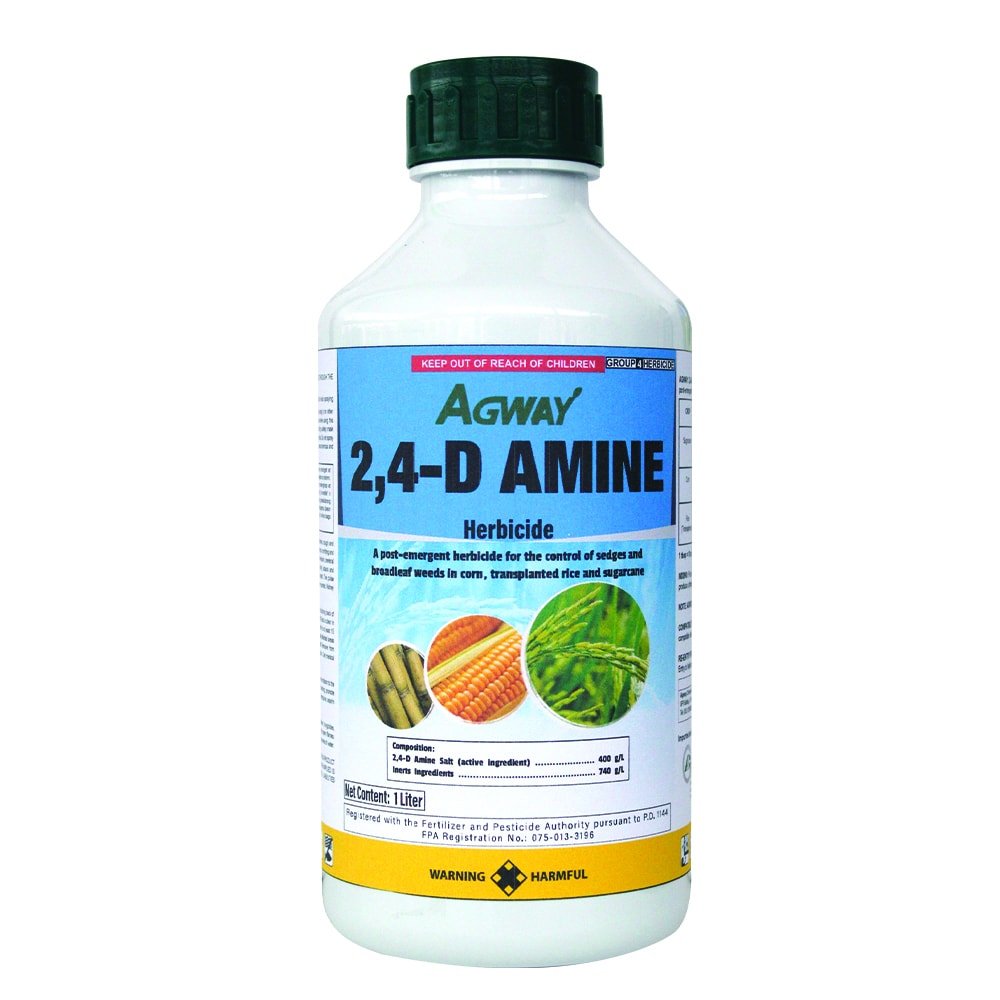
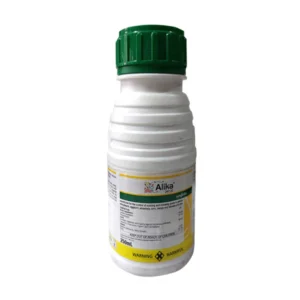
2,4-D Amine Herbicide – 1 L: Product Overview, Benefits, Uses, and Safety Guide
Introduction to 2,4-D Amine Herbicide – 1 L
2,4-D Amine Herbicide – 1 L is a herbicide product designed for the management of certain broadleaf weeds in approved agricultural, turf, and other vegetation-management settings. Its active ingredient, 2,4-dichlorophenoxyacetic acid, commonly known as 2,4-D, belongs to the synthetic auxin group of herbicides. These herbicides interfere with normal plant growth, causing abnormal development and eventually the death of susceptible plants.
Broadleaf weeds can compete with desirable crops and vegetation for sunlight, water, nutrients, and space. When left unmanage, they may reduce crop productivity, interfere with field operations, and increase maintenance requirements. Selecting an appropriate herbicide can help farmers, land managers, and qualify pest-control professionals manage susceptible weeds as part of an integrated weed-control program.
The 1-liter packaging offers a convenient quantity for product purchasing and inventory management, depending on the needs of the intended user. However, the package size alone does not determine the correct application rate or establish which crops and locations can legally be treated.
This comprehensive guide explores the characteristics, potential uses, benefits, purchasing considerations, and safety requirements associated with 2,4-D Amine Herbicide – 1 L.
What Is 2,4-D Amine Herbicide?
2,4-D is a selective herbicide widely recognize for controlling susceptible broadleaf weeds while allowing certain labele grasses and cereal crops to tolerate treatment when use correctly. Its selectivity depends on the crop species, growth stage, formulation, application rate, and environmental conditions.
The amine formulation typically contains a salt of 2,4-D. Amine salts are commonly formulated as water-base herbicide products, although the exact formulation and concentration vary among manufacturers. Buyers should check the actual product label to confirm the active ingredient concentration, salt type, formulation, and approved uses.
Unlike non-selective herbicides that can damage a wide range of green plants, 2,4-D is primarily use to target susceptible broadleaf vegetation. Nevertheless, it can severely injure sensitive crops, ornamental plants, trees, and other desirable vegetation if apply incorrectly or allowed to drift.
For this reason, choosing the correct formulation and following all label directions are essential steps in responsible weed management.
Key Features of 2,4-D Amine Herbicide – 1 L
1. Selective Broadleaf Weed Control
One of the best-known characteristics of 2,4-D is its ability to control susceptible broadleaf weeds in approve settings. Depending on the register product, target weeds may include certain annual and perennial broadleaf species.
Its selective activity can make it useful in specific grass-base systems where broadleaf weed management is necessary. However, selectivity is not universal, and the label must confirm whether a particular crop or site can be treated.
2. Synthetic Auxin Mode of Action
2,4-D acts as a synthetic auxin, mimicking the activity of natural plant growth hormones. In susceptible plants, it disrupts normal growth regulation and causes abnormal physiological responses.
This mode of action differs from that of herbicides that inhibit photosynthesis or specific amino acid synthesis pathways. Understanding the mode of action helps agricultural professionals develop appropriate weed-management and herbicide-resistance strategies.
3. Amine Formulation
The amine formulation is an important product characteristic because formulations can differ in handling requirements, volatility, compatibility, and application restrictions. The actual properties depend on the product’s specific composition.
Users should never assume that all 2,4-D formulations are interchangeable. Always follow the directions and restrictions printed on the exact product label.
4. Convenient 1-Liter Packaging
The 1-liter package provides a defined quantity that can be convenient for purchasing, stock management, and transportation when permitted. Buyers should confirm the net contents, container integrity, product registration, batch identification, and expiration or retest information where applicable.
The correct amount needed for a treatment depends on the registered application rate, treated area, and formulation concentration—not simply on the package size.
Common Applications of 2,4-D Amine Herbicide
2,4-D products are used in several weed-management settings, but permitted applications vary significantly by product and jurisdiction. Always confirm that the exact product is registered for the intended use.
Agricultural Weed Management
Certain 2,4-D formulations are register for controlling susceptible broadleaf weeds in specified crops and agricultural systems. Broadleaf weeds may compete with crops for essential resources and interfere with harvesting or other field operations.
Before use, check the product label for the permitted crop, target weeds, crop growth stage, application timing, and any restrictions related to nearby sensitive plants. Never assume that approval for one crop automatically applies to another.
Grass-Based Areas and Turf
Some registered formulations are suitable for broadleaf weed management in designated turf or grass-base settings. These applications require careful attention to grass species, site restrictions, and potential injury to nearby ornamental plants.
A product approved for agricultural fields may not be suitable for lawns, parks, sports fields, or residential areas. The exact label determines whether the application is permitted.
Pasture and Other Vegetation-Management Settings
Certain 2,4-D products may be approve for managing susceptible broadleaf weeds in specific pasture or other vegetation-management systems. Restrictions may apply to grazing, hay production, livestock access, sensitive vegetation, and the timing of treatment.
Users should verify all relevant instructions before applying the herbicide in areas use for grazing or forage production.
Benefits of Responsible 2,4-D Amine Herbicide Use
When an appropriate register product is used according to its approve directions, 2,4-D may offer several advantages.
Targeted broadleaf weed management: Its mode of action makes it useful against susceptible broadleaf weeds in label settings.
Support for crop and vegetation management: Effective control of competing weeds can help maintain the condition of approved crops and managed grass areas.
Integration with other weed-control methods: Where appropriate, 2,4-D can form part of an integrated weed-management program that includes cultivation, mowing, crop rotation, and other approved practices.
A well-established herbicide mode of action: Its synthetic auxin activity is well understood, helping trained users make informed decisions about herbicide selection and resistance management.
Actual results depend on weed susceptibility, weather, application conditions, plant growth stage, and adherence to the product label. No herbicide should be expected to control every weed species.
How to Choose Quality 2,4-D Amine Herbicide – 1 L
Selecting a reliable product and supplier is important for both performance and safety. Before purchasing, consider these factors:
- Active ingredient concentration: Verify the exact concentration and formulation on the official product label.
- Product registration: Confirm that the herbicide is legally registered for the intended application in your country or region.
- Manufacturer information: Check the manufacturer’s name, batch number, and traceability details.
- Label instructions: Ensure that the label clearly identifies approve crops or sites, target weeds, application restrictions, and required precautions.
- Safety data sheet: Obtain the current safety data sheet for hazard information, personal protective equipment, storage, first aid, and spill response.
- Packaging quality: Choose a properly sealed, clearly label container without damage or leakage.
- Supplier reliability: Purchase from a reputable supplier that can provide authentic documentation and answer product-specific questions.
Comparing verified product information is more useful than relying only on promotional descriptions or price. A trustworthy product listing should accurately distinguish the formulation and concentration from other 2,4-D products.
Safety Precautions for 2,4-D Amine Herbicide
Responsible herbicide use begins with reading the complete label and safety data sheet before opening the container. Follow all applicable regulations and workplace safety requirements.
Wear the personal protective equipment specify by the manufacturer. Depending on the product and task, this may include chemical-resistant gloves, protective clothing, eye protection, and additional equipment required by the label.
Avoid contact with the skin and eyes, and do not inhale spray mist. Use only approved application equipment and follow the label’s mixing and application directions. Do not mix the herbicide with another product unless the label or other authorized technical guidance specifically permits it.
Preventing Spray Drift and Damage to Desirable Plants
2,4-D can injure susceptible broadleaf crops, flowers, shrubs, trees, and other desirable vegetation. Preventing off-target movement is therefore especially important.
Follow the label’s weather restrictions, buffer zones, application method requirements, and instructions concerning wind and temperature. Do not spray when conditions could carry droplets or vapors toward sensitive plants, homes, water sources, or other restricted areas.
Storage and Disposal
Keep the product in its original, label container and store it under the conditions stated on the label. Secure the storage area against unauthorize access and keep the herbicide away from food, animal feed, and drinking water.
Never reuse an empty pesticide container for household or other purposes. Dispose of unuse product, empty packaging, and contaminated materials according to label instructions and local regulations. Prevent spills and runoff from reaching drains, streams, ponds, and other water resources.
If exposure occurs, follow the product’s first-aid instructions and contact a qualified medical professional or poison-control service when appropriate.
Frequently Asked Questions About 2,4-D Amine Herbicide – 1 L
What is 2,4-D Amine Herbicide used for?
It is used to control certain susceptible broadleaf weeds in approved agricultural, turf, pasture, and other vegetation-management settings. The permitted uses depend on the exact formulation and local registration.
What does the amine formulation mean?
It generally indicates that the product contains an amine salt of 2,4-D. The precise formulation, concentration, and handling requirements must be confirmed on the product label.
Can 2,4-D Amine Herbicide be used on all crops?
No. Some crops and ornamental plants are highly sensitive to 2,4-D. Use it only on crops and site specifically authorized by the label.
Is the 1-liter container suitable for every application?
No. The package size is simply the amount of product supply. The amount require for any treatment must be determined from the approved label directions and the size of the area being treated.
How should 2,4-D Amine Herbicide be stored?
Store it in its original label container, secure and protected under the conditions specified by the manufacturer. Follow all applicable storage and disposal requirements.
Conclusion: Choosing 2,4-D Amine Herbicide – 1 L Responsibly
2,4-D Amine Herbicide – 1 L is a herbicide product associated with the selective control of susceptible broadleaf weeds in approve settings. Its synthetic auxin mode of action makes it a recognized option for certain agricultural and vegetation-management programs.
For farmers, land managers, and commercial buyers, the most important purchasing considerations include verified active ingredient concentration, authentic product labeling, legal registration, packaging integrity, and access to current safety documentation. Proper application and prevention of spray drift are equally important for protecting desirable vegetation, people, animals, and the environment.
Before purchasing or using 2,4-D Amine Herbicide – 1 L, confirm that the exact product is authorize for your intend crop or site and follow every label instruction. When incorporated appropriately into an integrated weed-management program, it can support the responsible management of susceptible broadleaf weeds.
- 2,4-D Amine Herbicide
- Buy 2,4-D Amine Herbicide
- 2,4-D herbicide 1 liter
- Selective broadleaf weed control
- 2,4-D amine formulation
- Agricultural weed management
- 2,4-D herbicide uses
- 2,4-D herbicide safety
- Broadleaf weed control product
- 2,4-D herbicide supplier
- 2,4-D product specifications
- Herbicide for approved grass-based areas
Reviews
There are no reviews yet.