
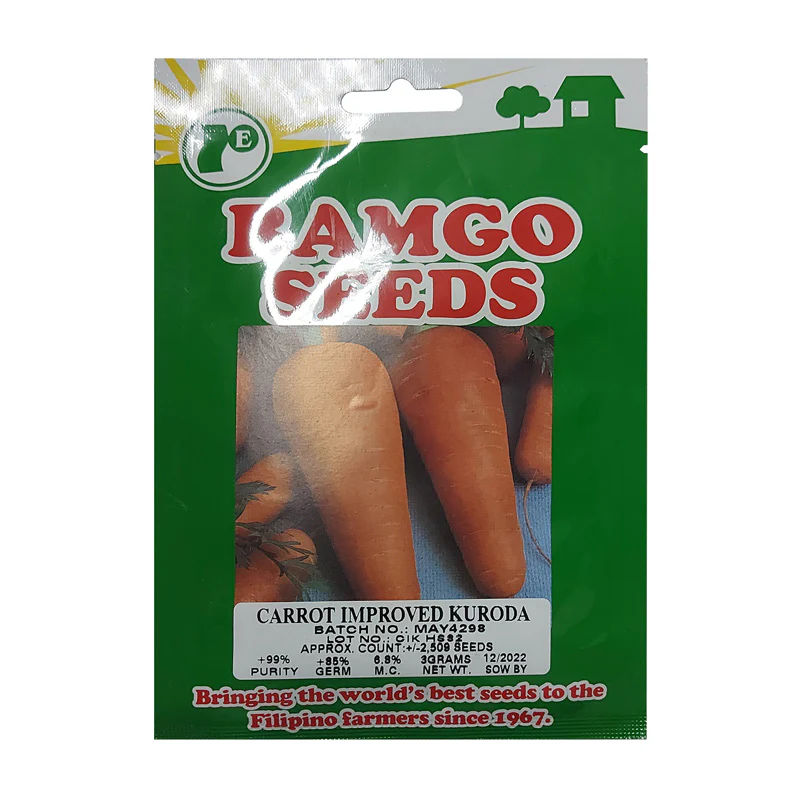

Description
New Kuroda Carrot Seeds: A Complete Guide to Planting, Growing, and Harvesting Carrots
Introduction to New Kuroda Carrot Seeds
Carrots are among the most popular root vegetables grown by home gardeners, vegetable farmers, and commercial growers. Known for their versatility in cooking and their nutritional value, carrots can be used in salads, soups, stews, fresh juices, and many other dishes. Choosing suitable seeds and providing proper growing conditions are important steps toward producing healthy carrots. New Kuroda Carrot Seeds are a seed option for growers interested in cultivating Kuroda-type carrots for home gardening or vegetable production.
Kuroda-type carrots are commonly associate with varieties developed for warm-climate vegetable growing. Depending on the specific seed variety, they may produce orange roots with a relatively broad, taper shape. However, the exact root size, maturity period, disease tolerance, and growing characteristics of New Kuroda Carrot Seeds should be confirm from the seed packet or supplier’s official product information.
Growing carrots successfully requires suitable soil preparation, consistent moisture, careful sowing, and proper weed management. Because carrots develop underground, the condition of the soil has a significant influence on root shape and quality. With a suitable growing environment and consistent care, gardeners can work toward a healthy carrot harvest.
This guide explains the potential benefits of growing New Kuroda Carrot Seeds, how to plant carrot seeds, how to care for developing plants, and what to consider before purchasing carrot seeds online.
What Are New Kuroda Carrot Seeds
New Kuroda Carrot Seeds are intended for growing carrot plants that produce edible roots. Kuroda-type carrots are a recognize category of carrots often grown in regions with warm growing conditions. The specific characteristics of a product sold as “New Kuroda” may vary according to the seed producer and variety selection.
Carrots are root vegetables belonging to the Apiaceae family. Their edible roots commonly develop an orange color because of naturally occurring pigments called carotenoids, including beta-carotene. Carrots also provide dietary fiber and other nutrients as part of a balance diet.
The quality of a carrot crop depends on several factors, including seed quality, soil structure, moisture, temperature, sunlight, plant spacing, and crop management. Even good-quality seeds may produce uneven results if the soil is compacted, watering is inconsistent, or seedlings are crowded.
Before purchasing New Kuroda Carrot Seeds, review the packet for variety information, recommended planting season, sowing instructions, expected maturity period, and seed quantity. These details can help determine whether the seeds are suitable for your location and gardening plans.
Benefits of Growing New Kuroda Carrot Seeds
1. Suitable for Vegetable Gardening
Carrots are useful vegetables for backyard gardens, raised beds, and larger vegetable-growing areas. New Kuroda Carrot Seeds may be worth considering for growers who want to include carrots in their seasonal planting schedule, provided the variety is appropriate for their climate.
A well-planned vegetable garden can provide fresh produce for household cooking while allowing grower to learn about seed germination, root development, and harvesting.
2. An Opportunity for Warm-Climate Carrot Production
Kuroda-type carrots are often associated with warm-climate production. This can make them an option for grower in regions where suitable Kuroda varieties are recommend. Nevertheless, temperature tolerance and performance depend on the exact variety and local growing conditions.
Check the supplier’s growing recommendations before planting, particularly if your area experiences high temperatures, heavy rainfall, or seasonal humidity.
3. Versatile Culinary Uses
Carrots can be eaten raw or cooked and incorporate into many meals. They can be added to salads, soups, vegetable dish, rice meals, stews, and fresh juices. Harvesting carrots from a home garden can also provide an opportunity to use freshly harvested vegetables in everyday cooking.
4. An Educational Gardening Project
Growing carrots from seed offers a practical way to learn about root crops. Gardeners can observe how seedlings emerge, how foliage develops, and how underground roots respond to soil conditions and plant spacing.
These are general advantages of growing carrots and should not be interpreted as guarantees of particular yields or root characteristics from New Kuroda Carrot Seeds.
How to Plant New Kuroda Carrot Seeds
Correct sowing practices are essential because carrots are usually grown by direct seeding. Their roots can be damage or distorted when young plants are disturb or transplanted improperly.
Step 1: Choose a Suitable Growing Location
Select a location that receives adequate sunlight, preferably around six hours or more of direct sunlight daily where conditions permit. Carrots generally perform best in an open site with good drainage and sufficient light for healthy foliage development.
Avoid low areas where water collects after rain, as prolong waterlogging can interfere with root development.
Step 2: Prepare the Soil
Carrots grow best in loose, friable soil that allows roots to expand without obstruction. Remove stones, large clods, and other obstacles from the planting area. Where necessary, loosen the soil to a depth appropriate for the expected root length.
Heavy or compacted soil may cause roots to become forked, twisted, or short. Incorporating suitable organic matter can improve soil structure, but avoid using excessive fresh manure or applying too much nitrogen, which can encourage leafy growth and affect root quality.
Step 3: Sow the Seeds Directly
Create shallow rows and sow the seeds according to the packet instructions. As a general starting point, many carrot seeds are planted approximately 0.5–1 centimeter deep, but the instructions supplied with New Kuroda Carrot Seeds should take priority.
Cover the seeds lightly with fine soil and water gently to prevent them from being displaced. Avoid sowing too deeply, because carrot seeds are small and need suitable conditions to emerge.
Step 4: Maintain Consistent Moisture
Carrot seeds require adequate moisture during germination. Keep the soil surface evenly moist without making it waterlogged. If the surface dries out repeatedly, germination may become uneven.
Use gentle watering to avoid washing seed out of the rows or creating a hard soil crust that makes emergence more difficult.
Step 5: Thin the Seedlings
Once seedlings emerge and are large enough to handle, thin them according to the spacing recommended on the packet. Crowded plants compete for space, water, nutrients, and light, which can restrict root development.
Thin carefully to leave enough room for the carrots to grow to their expected size. The correct spacing depends on the variety and whether the crop is intended for small, tender roots or larger mature carrots.
Essential Care for Healthy Carrot Plants
Watering and Moisture Management
Carrots need regular moisture, particularly during germination and root development. Inconsistent watering can contribute to cracking or uneven root growth. Adjust watering according to rainfall, temperature, soil type, and the stage of development.
Water deeply enough to moisten the active root zone while allowing excess water to drain. Avoid keeping the soil continuously saturated.
Fertilization
Healthy carrot growth depends on balance nutrition. Soil testing can help identify nutrient deficiencies and guide fertilizer selection. Apply fertilizer according to soil requirements and product instructions.
Avoid excessive nitrogen, which may encourage abundant foliage rather than balance root development. Do not apply fertilizer directly onto seedlings at concentrated rates unless the product directions specifically permit that method.
Weed Control
Weeds compete with young carrot plants for sunlight, water, and nutrients. Because carrots initially grow slowly, weed competition can be particularly challenging during early development.
Remove weeds carefully while they are small. Avoid deep cultivation close to carrot rows because the roots may be damaged.
Pest and Disease Monitoring
Inspect the crop regularly for unusual leaf symptoms, root damage, and signs of pests. Use clean tools, maintain appropriate spacing, and practice crop rotation where practical.
If a pest or disease problem occurs, identify the cause before selecting a treatment. Any pesticide use must be approve for the intend crop and apply according to its label and local regulations.
When and How to Harvest Kuroda Carrots
The correct harvest time depends on the exact variety, planting date, climate, and desire root size. Consult the seed packet for the expected maturity period rather than relying on a universal number of days.
Check a few roots before harvesting the entire crop. Mature carrots should have develope the size and color expected for the variety. Loosen the soil carefully if needed, then pull the roots gently to minimize breakage.
After harvesting, remove excess soil and damage roots. Handle the carrots carefully to avoid bruising and store them under appropriate cool, humid conditions suitable for fresh root vegetables.
Common Problems When Growing Carrots
Carrot growers may encounter uneven germination, forked roots, cracking, small roots, or excessive foliage. These problems can have several causes.
- Poor germination: May result from dry soil, excessive sowing depth, unsuitable temperatures, or low-quality seed.
- Forked or distorted roots: Can be associated with compacted soil, stones, root injury, or certain soil pests.
- Cracked roots: May develop when soil moisture fluctuates significantly.
- Small roots: May result from crowding, early harvesting, weed competition, or insufficient growing conditions.
- Excessive foliage: Can be associate with excessive nitrogen or other imbalance in crop management.
Careful soil preparation, consistent watering, proper spacing, and appropriate fertilization can help reduce the risk of these problems.
What to Consider Before Buying New Kuroda Carrot Seeds
Before purchasing New Kuroda Carrot Seeds, consider these important factors:
- Variety authenticity: Confirm the exact variety name and characteristics with the seed supplier.
- Seed quality: Check packaging condition and available lot, germination, and expiry information.
- Climate suitability: Confirm whether the variety is recommended for your local growing season.
- Planting instructions: Review sowing depth, spacing, and expected maturity information.
- Quantity: Check the packet’s stated seed weight or seed count.
- Supplier reliability: Purchase from a reputable gardening or agricultural supply store.
- Growing conditions: Make sure your soil is sufficiently loose, well-drained, and suitable for root development.
These checks can help growers choose seeds that fit their available space, climate, and vegetable production goals.
Frequently Asked Questions About New Kuroda Carrot Seeds
1. What are New Kuroda Carrot Seeds used for?
They are used to grow carrot plants for vegetable production. The exact characteristics of the variety should be confirmed through the seed packet or supplier.
2. Can Kuroda carrots grow in warm climates?
Kuroda-type carrots are commonly associated with warm-climate production, but suitability depends on the particular variety, local temperatures, and growing conditions.
3. How deep should carrot seeds be planted?
Many carrot seeds are planted approximately 0.5–1 centimeter deep. Follow the instructions on the New Kuroda seed packet for the best guidance.
4. Do carrots need full sunlight?
Carrots generally grow well with several hours of direct sunlight each day. Around six hours or more is a useful general target, depending on the climate and growing environment.
5. Why do carrot roots become forked?
Forking may be caused by compacted soil, stones, root injury, or certain soil pests. Preparing loose, stone-free soil can help reduce the risk.
6. How can I improve carrot germination?
Use good-quality seeds, sow at the recommended depth, maintain consistent surface moisture, and avoid allowing the soil to dry out during germination.
Conclusion: Grow Carrots with New Kuroda Carrot Seeds
New Kuroda Carrot Seeds offer an option for gardeners and vegetable growers interested in cultivating carrots for household use or vegetable production. Successful carrot growing begins with selecting suitable seeds and preparing loose, well-drained soil that allows the roots to develop properly.
By following the packet instructions, maintaining consistent moisture, thinning seedlings, controlling weeds, and managing nutrients carefully, growers can create better conditions for a healthy carrot crop. Monitoring plants throughout the growing season and harvesting at the appropriate stage can also help maintain root quality.
For anyone searching online for New Kuroda Carrot Seeds, reviewing verified variety information and buying from a reliable supplier are important steps toward making an informed purchase. With appropriate growing conditions and careful crop management, carrots can be a rewarding addition to a home garden or vegetable farm.
- New Kuroda Carrot Seeds
- Kuroda Carrot Seeds
- Carrot Seeds for Planting
- Kuroda Carrot Variety
- Carrot Seeds for Vegetable Farming
- Carrot Seeds for Home Gardening
- How to Grow Carrots from Seeds
- Carrot Planting Guide
- Root Vegetable Seeds
- Carrot Farming Tips
- Vegetable Seeds for Garden
- Carrot Crop Management

Reviews
There are no reviews yet.