
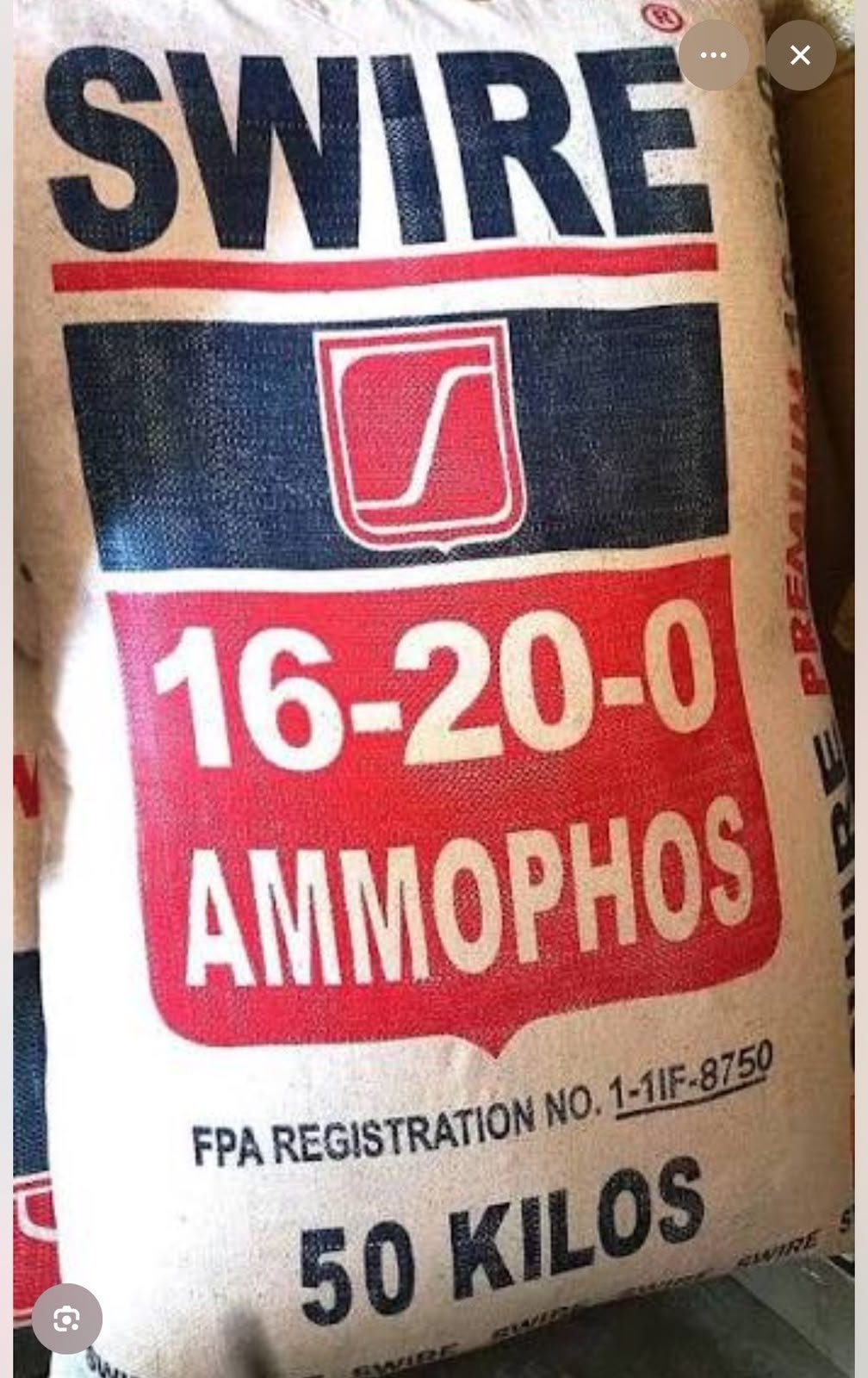

Description
Swire 16-20-0 Ammonium Phosphate Fertilizer: Benefits, Uses, and Importance in Modern Agriculture
Introduction to Swire 16-20-0 Ammonium Phosphate Fertilizer
Successful farming depends on maintaining healthy soil, providing essential nutrients, and choosing the right fertilizer for each crop’s growth requirements. Among the nutrients needed for productive agriculture, nitrogen and phosphorus play important roles in plant development, root establishment, energy transfer, and crop production. Swire 16-20-0 Ammonium Phosphate Fertilizer is a fertilizer option designed to supply these two important nutrients to crops as part of a balanced soil fertility management program.
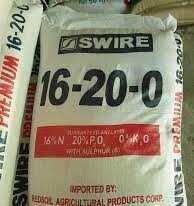
With a fertilizer grade of 16-20-0, this product contains 16% nitrogen and 20% phosphate expressed as phosphorus pentoxide (P₂O₅), with no declared potash (K₂O). This nutrient combination can be useful for agricultural situations where crops require both nitrogen and phosphorus but do not need additional potassium from the same fertilizer product.
Farmers, agricultural suppliers, commercial growers, and fertilizer distributors may consider Swire 16-20-0 Ammonium Phosphate Fertilizer when evaluating nutrient sources for their farming operations. Understanding its nutrient composition, agricultural applications, benefits, and proper handling can help users make informed fertilizer decisions.
What Is Swire 16-20-0 Ammonium Phosphate Fertilizer?
Swire 16-20-0 Ammonium Phosphate Fertilizer is identified by its NPK grade, which describes the declared percentages of nitrogen, phosphate, and potash. Ammonium phosphate fertilizers provide nitrogen in an ammonium form and phosphorus in phosphate forms that can become available to plants, depending on the product formulation and soil conditions.
The three numbers in the 16-20-0 fertilizer grade represent the following:
- 16% nitrogen (N): Supports leaf development, chlorophyll production, protein formation, and vegetative growth.
- 20% phosphate (P₂O₅): Supplies phosphorus expressed using the conventional fertilizer-labeling system, supporting root development, energy transfer, and reproductive growth.
- 0% potash (K₂O): Indicates that the product has no declared potash content in its NPK analysis.
For example, a 50-kilogram quantity of fertilizer with this grade contains approximately 8 kilograms of nitrogen and 10 kilograms of phosphate expressed as P₂O₅. These values are based on the stated fertilizer analysis and do not represent the total amount of elemental phosphorus.
The exact formulation, physical characteristics, packaging, and recommended uses should be confirmed through the manufacturer’s product label and supplier documentation.
Key Benefits of Swire 16-20-0 Ammonium Phosphate Fertilizer
1. Supports Strong Root Development
Phosphorus is an essential nutrient for early plant development. It contributes to energy transfer within plant cells and supports the processes involved in root growth, establishment, and development.
Adequate phosphorus nutrition is particularly important during the early stages of crop growth, when plants are establishing their root systems. A well-developed root system helps crops explore the soil for water and nutrients.
Swire 16-20-0 Ammonium Phosphate Fertilizer can be considered where soil tests or local crop recommendations indicate that phosphorus and nitrogen are both needed. Proper placement and application timing are important because phosphorus movement through soil is often limited.
2. Provides Nitrogen for Vegetative Growth
Nitrogen is necessary for the production of chlorophyll, amino acids, proteins, and enzymes. These compounds are involved in photosynthesis and many other processes essential for plant development.
The 16% nitrogen content of Swire 16-20-0 Ammonium Phosphate Fertilizer allows farmers to supply nitrogen while simultaneously providing phosphate. This combination can simplify fertilizer planning when both nutrients are required.
Adequate nitrogen can help plants develop healthy foliage and maintain productive growth. However, excessive nitrogen may promote overly vigorous vegetative growth, delay maturity in some crops, and increase nutrient losses. Application rates should therefore be based on crop requirements and soil test results.
3. Supplies Two Essential Nutrients in One Product
One important feature of 16-20-0 fertilizer is its combined supply of nitrogen and phosphate. Instead of applying separate products to provide these two nutrients, farmers may be able to meet part of their nitrogen and phosphorus requirements with a single fertilizer.
This can simplify fertilizer calculations, purchasing, transportation, and field application, depending on the farm’s nutrient management program.
However, the combined nutrient ratio will not suit every crop or soil. Farmers should calculate the nitrogen and phosphorus supplied by the product to ensure that neither nutrient is applied excessively while attempting to meet the requirement for the other.
4. Supports Efficient Nutrient Management
Fertilizer efficiency depends on applying appropriate nutrients in suitable amounts, at the correct time, and in the right location. Swire 16-20-0 Ammonium Phosphate Fertilizer may be incorporated into a nutrient management program where both nitrogen and phosphorus are required.
Soil testing helps identify nutrient deficiencies and provides information for selecting fertilizer grades. By using soil analysis and crop-specific recommendations, farmers can make more informed decisions about fertilizer rates and reduce unnecessary applications.
Agricultural Applications of Swire 16-20-0 Fertilizer
Ammonium phosphate fertilizers are used in various agricultural nutrient management systems. However, the suitability of Swire 16-20-0 Ammonium Phosphate Fertilizer depends on the crop, soil nutrient status, growing conditions, and local agricultural recommendations.
Potential applications may include selected cereal crops, field crops, forage production, and other agricultural systems where nitrogen and phosphorus are needed together.
For crops requiring phosphorus during establishment, an appropriate ammonium phosphate fertilizer may help supply nutrients near the developing root system when applied using a recommended placement method. The exact application method should follow the product label and crop-specific guidance to avoid fertilizer injury.
Farmers should not assume that every crop requires the same amount of fertilizer. Soil texture, pH, organic matter, rainfall, irrigation, expected yield, and previous fertilizer applications all influence nutrient requirements.
A soil test and a locally recommended nutrient plan are the best starting points for determining whether the 16-20-0 grade is suitable for a particular field.
Understanding the NPK Ratio of 16-20-0
The NPK ratio helps agricultural users compare fertilizer products and understand their nutrient composition.
For Swire 16-20-0 Ammonium Phosphate Fertilizer, the grade indicates that nitrogen and phosphate are the declared primary nutrients, while potash is not declared in the analysis.
This means the fertilizer may be useful when a crop requires nitrogen and phosphorus but needs little or no additional potassium from that application. If soil tests indicate a potassium deficiency, a separate potassium fertilizer or another suitable fertilizer blend may be necessary.
The fertilizer grade also helps with nutrient calculations. For example, applying 100 kilograms of a 16-20-0 fertilizer supplies approximately 16 kilograms of nitrogen and 20 kilograms of phosphate expressed as P₂O₅.
Because the nitrogen and phosphate are supplied in a fixed ratio, the product should be selected only when that ratio fits the crop’s nutrient requirements. Applying more fertilizer to satisfy one nutrient requirement can result in excessive application of the other.
Best Practices for Applying Ammonium Phosphate Fertilizer
Proper fertilizer management can improve nutrient availability, support crop growth, and reduce waste. Consider the following general practices when using Swire 16-20-0 Ammonium Phosphate Fertilizer.
Conduct soil testing: Determine existing nutrient levels, soil pH, and other relevant soil characteristics before choosing a fertilizer rate.
Follow crop-specific recommendations: Use the recommended nutrient rates for the crop, location, and expected production level.
Calculate nutrient quantities: Account for the nitrogen and phosphate supplied by this product, as well as nutrients from other fertilizers, manure, and soil reserves.
Apply at an appropriate growth stage: Follow local recommendations for application timing and placement, especially when phosphorus is needed during early crop establishment.
Avoid direct fertilizer contact with seeds or roots when inappropriate: Concentrated fertilizer placed too close to seeds or young roots can cause injury under certain soil moisture and salinity conditions. Follow the product label and recommended placement guidelines.
Monitor crop performance: Observe crop growth and review soil test results periodically to refine future fertilizer applications.
These practices can help farmers use Swire 16-20-0 Ammonium Phosphate Fertilizer more effectively as part of a broader nutrient management strategy.
Storage and Safe Handling
Correct fertilizer storage helps maintain product quality and promotes workplace safety. Store Swire 16-20-0 Ammonium Phosphate Fertilizer in its original labeled packaging in a dry, well-ventilated location. Protect the product from rain, excessive moisture, contamination, and physical damage.
Keep fertilizer separate from food, animal feed, and incompatible materials. Restrict access to storage areas, particularly for children and animals, and follow the manufacturer’s handling instructions.
Workers should avoid unnecessary dust exposure and use appropriate protective equipment when handling fertilizer. Wash hands after use, clean up spills according to product guidance, and dispose of packaging in accordance with local regulations.
Agricultural suppliers should also maintain suitable storage conditions during transportation and inventory management to preserve the condition of fertilizer bags.
Why Choose Swire 16-20-0 Ammonium Phosphate Fertilizer?
For farmers and agricultural businesses comparing fertilizer products, Swire 16-20-0 Ammonium Phosphate Fertilizer offers a combined nitrogen and phosphate grade that can support crop nutrition when both nutrients are required.
Its 16-20-0 analysis provides a practical basis for calculating nutrient quantities and comparing fertilizer options. The product may also simplify purchasing and application planning when its nutrient ratio aligns with the requirements of a particular field.
Nevertheless, fertilizer selection should be based on agronomic needs rather than the product name alone. Buyers should verify the manufacturer’s specifications, packaging, supplier reliability, and recommended applications before purchasing.
By combining appropriate fertilizer selection with soil testing, responsible application, and good crop management, farmers can make better-informed decisions about nutrient supply and soil fertility.
Conclusion
Swire 16-20-0 Ammonium Phosphate Fertilizer is a nitrogen-and-phosphate fertilizer option for agricultural users seeking to supply two essential nutrients through one product. Its 16-20-0 grade indicates 16% nitrogen, 20% phosphate expressed as P₂O₅, and no declared potash.
Nitrogen supports chlorophyll production, protein formation, and vegetative growth, while phosphorus contributes to energy transfer, root establishment, and plant development. When both nutrients are required, an appropriate ammonium phosphate fertilizer can form part of an effective crop nutrition program.
However, successful fertilizer management depends on selecting the correct nutrient ratio, calculating application rates carefully, and considering soil conditions and crop requirements. Soil testing and local agronomic guidance are essential for determining whether this product is suitable for a particular farming operation.
For farmers, agricultural retailers, and fertilizer distributors, understanding the characteristics of Swire 16-20-0 Ammonium Phosphate Fertilizer supports informed purchasing and responsible agricultural practices. When selected and applied correctly, it can contribute to a well-planned soil fertility program and help crops obtain the nutrients needed for productive growth.
Frequently Asked Questions (FAQs)
1. What is Swire 16-20-0 Ammonium Phosphate Fertilizer used for?
It supplies nitrogen and phosphate to crops when both nutrients are required. Its suitability depends on crop needs, soil test results, and local agricultural recommendations.
2. What does the 16-20-0 fertilizer grade mean?
It indicates 16% nitrogen, 20% phosphate expressed as P₂O₅, and 0% declared potash expressed as K₂O.
3. How much nitrogen and phosphate are in 50 kg of 16-20-0 fertilizer?
A 50-kilogram quantity contains approximately 8 kilograms of nitrogen and 10 kilograms of phosphate expressed as P₂O₅.
4. Can Swire 16-20-0 fertilizer be used for all crops?
No single fertilizer grade is appropriate for every crop or soil. The product should be used where its nutrient ratio matches the crop’s requirements.
5. Does Swire 16-20-0 provide potassium?
Its stated NPK grade contains no declared potash. Additional potassium may be needed if soil tests identify a deficiency.
6. How can farmers improve fertilizer efficiency?
Farmers can improve nutrient management through soil testing, appropriate application timing and placement, accurate rate calculations, and regular assessment of crop performance.
Reviews
There are no reviews yet.