

Description
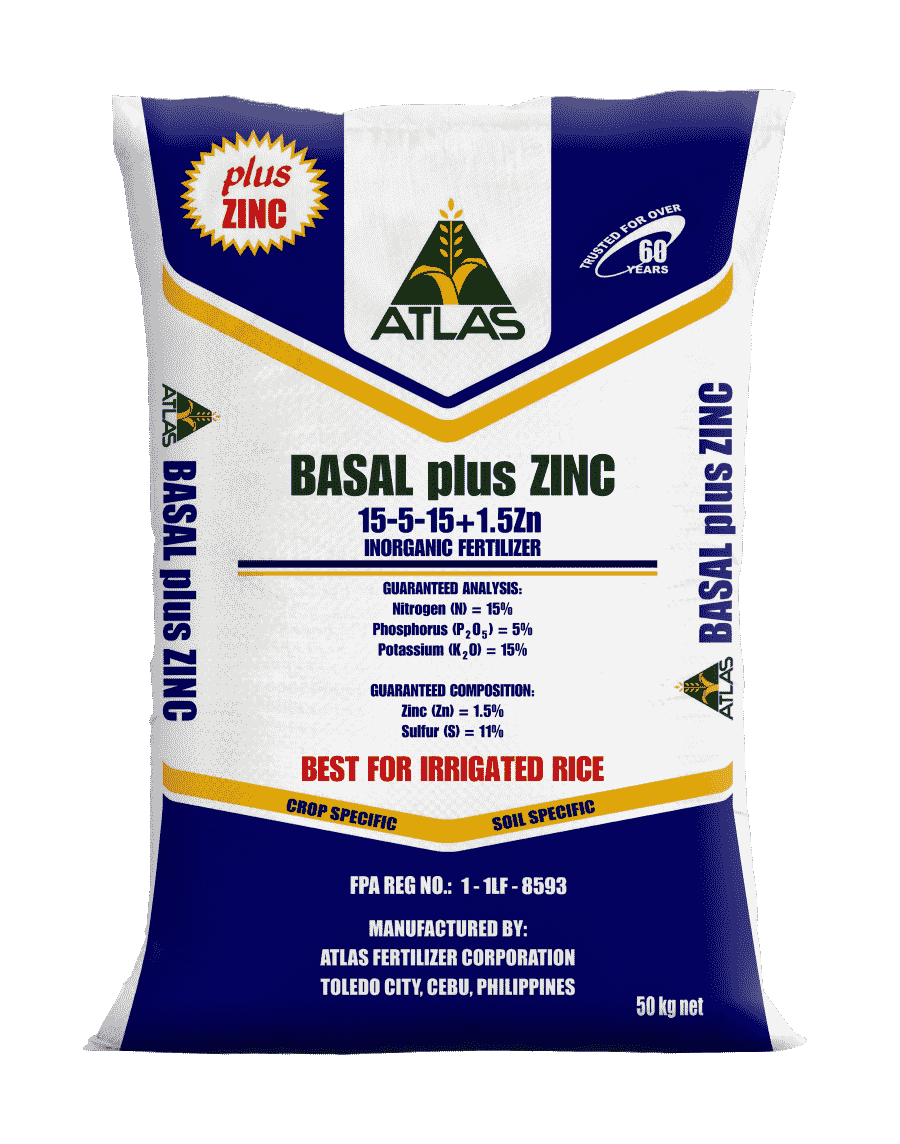
ATLAS BASAL PLUS ZINC 15-5-15-1.5Zn 50kg – Fertilizer Benefits, Uses, and Application Guide
Introduction to ATLAS BASAL PLUS ZINC 15-5-15-1.5Zn 50kg
ATLAS BASAL PLUS ZINC 15-5-15-1.5Zn 50kg is a compound fertilizer designed to provide crops with essential macronutrients and zinc, an important micronutrient for healthy plant development. Fertilizers containing nitrogen, phosphorus, potassium, and zinc can play an important role in agricultural nutrient management when their nutrient composition matches the needs of the crop and the condition of the soil.
Nitrogen supports leaf and stem development, phosphorus contributes to root growth and energy transfer, and potassium helps regulate water balance and several metabolic processes. Zinc is required in smaller quantities, but it contributes to enzyme activity, protein synthesis, and normal plant growth. Supplying these nutrients in appropriate amounts can help farmers manage nutrient deficiencies and maintain productive growing conditions.
The product name indicates an NPK grade of 15-5-15 with 1.5% zinc, subject to verification on the official product label. The 50 kg packaging is a practical option for agricultural supply businesses, commercial growers, and farms purchasing fertilizer for planned crop nutrition programs.
Before using ATLAS BASAL PLUS ZINC, farmers should confirm the guaranteed nutrient analysis, product specifications, and application directions on the package. Proper fertilizer selection should always be based on crop requirements, soil conditions, and local agricultural recommendations.
What Is ATLAS BASAL PLUS ZINC Fertilizer?
ATLAS BASAL PLUS ZINC is identified by its product name as a compound fertilizer that combines primary plant nutrients with zinc. Compound fertilizers provide multiple nutrients in one product, making them useful when the declared nutrient ratio matches a crop’s requirements.
The fertilizer grade 15-5-15-1.5Zn can be understood as follows, provided the product label confirms this analysis:
- 15% Nitrogen (N): Supports chlorophyll production, protein formation, and vegetative growth.
- 5% Phosphate (P₂O₅): Supports energy transfer and normal root development.
- 15% Potash (K₂O): Supports water regulation, enzyme activity, and nutrient transport.
- 1.5% Zinc (Zn): Supplies a micronutrient involved in several essential plant growth processes.
These figures represent the declared nutrient percentages rather than the total amount of fertilizer needed for a field. The product’s other characteristics, including the chemical forms of its nutrients, should be confirmed through the manufacturer’s documentation.
Key Benefits of ATLAS BASAL PLUS ZINC 15-5-15
1. Supports Healthy Leaf and Stem Development
Nitrogen is essential for chlorophyll formation and the production of proteins that plants need for growth. Adequate nitrogen nutrition supports healthy foliage and normal vegetative development.
When plants do not receive enough nitrogen, they may develop yellowing leaves, reduced vigor, or slow growth. A nitrogen-containing fertilizer may help correct a deficiency when nitrogen shortage is the underlying cause.
ATLAS BASAL PLUS ZINC supplies a declared nitrogen content of 15%, which may suit certain crop nutrition programs when the product’s analysis aligns with soil and crop requirements.
2. Helps Support Root Development
Phosphorus is important for energy transfer and various processes involved in plant development. It can contribute to root establishment and help young plants develop the root systems needed to obtain water and nutrients.
The declared 5% phosphate content may be useful where soil testing indicates that additional phosphorus is needed. However, phosphorus availability varies with soil pH, soil chemistry, and other environmental conditions. Applying extra phosphate when the soil already contains sufficient amounts may not improve crop performance.
3. Provides Potassium for Plant Functions
Potassium helps regulate water movement within plants and supports enzyme activation and the transport of sugars. These processes contribute to normal plant metabolism and development.
ATLAS BASAL PLUS ZINC has a declared potash grade of 15%, subject to label confirmation. This nutrient may be valuable where crop requirements and soil tests indicate that additional potassium is necessary.
Adequate potassium nutrition can support normal crop development, but fertilizer alone cannot guarantee improved yields or protect plants from every environmental stress.
4. Supplies Zinc as an Essential Micronutrient
Zinc is required in relatively small quantities but plays an important role in enzyme activity, protein synthesis, and plant growth regulation. Zinc deficiency can interfere with normal crop development and may produce symptoms such as stunted growth, shortened internodes, or changes in leaf appearance.
A fertilizer containing zinc can help supply this micronutrient when the soil or crop assessment indicates a need. Because zinc deficiency symptoms can resemble other nutrient problems, soil testing and qualified agricultural advice can help identify the correct solution.
The product name indicates 1.5% zinc, but buyers should verify this concentration and the form of zinc from the actual label.
5. Combines Multiple Nutrients in One Fertilizer
One potential advantage of ATLAS BASAL PLUS ZINC is that it combines nitrogen, phosphate, potash, and zinc in a single product. This may simplify fertilizer planning when a crop needs all four nutrients.
However, no single fertilizer formulation is suitable for every soil or crop. Other nutrients, including sulfur, calcium, magnesium, or additional micronutrients, may also be needed depending on soil test results and crop requirements.
Agricultural Applications of ATLAS BASAL PLUS ZINC 50kg
Fertilizers containing NPK and zinc can be considered in different agricultural systems when the nutrient composition matches crop requirements. The suitability of this particular product should be confirmed through its label and local agricultural recommendations.
Potential agricultural settings for appropriately selected compound fertilizers include:
- Rice farming: Nitrogen, phosphorus, potassium, and zinc can all be relevant to rice nutrition, depending on soil conditions and crop requirements.
- Vegetable production: Different vegetables require carefully managed nutrient supplies for establishment, leaf development, and produce formation.
- Field crops: Selected field crops may benefit from compound fertilizer applications when soil tests indicate deficiencies.
- Horticultural production: Fruit and other horticultural crops require crop-specific nutrition programs based on soil fertility and growth stage.
- General farm nutrient management: Compound fertilizers may be incorporated into a wider fertility plan to address identified nutrient needs.
These are general examples, not confirmation that every crop is approved or recommended for the specific ATLAS BASAL PLUS ZINC product. Always consult the official label before use.
Best Practices for Applying ATLAS BASAL PLUS ZINC Fertilizer
Proper fertilizer management helps improve nutrient efficiency while reducing unnecessary expenses and environmental risks.
Conduct soil testing. Soil analysis helps determine whether nitrogen, phosphorus, potassium, and zinc are needed. It can also provide information about soil pH and other conditions that influence nutrient availability.
Consider crop-specific requirements. Nutrient needs vary by crop, growth stage, soil type, weather, and expected yield. Use recommendations developed for the crop and growing area rather than assuming a universal application rate.
Follow the product label. Check the guaranteed analysis and apply the fertilizer according to the manufacturer’s directions or advice from a qualified local agricultural professional.
Avoid overapplication. Excessive fertilizer can cause nutrient imbalances, waste money, and increase the risk of environmental contamination. Excessive zinc may also interfere with plant growth and the uptake of other nutrients.
Use suitable placement and timing. Follow recommended application practices for the crop and local conditions. Avoid allowing fertilizer to enter waterways through runoff or drainage.
Review the complete nutrition program. ATLAS BASAL PLUS ZINC supplies the nutrients declared on its label, but additional fertilizers may be needed if other nutrient deficiencies are identified.
Storage and Handling Guidelines
Store ATLAS BASAL PLUS ZINC 15-5-15-1.5Zn 50kg in a dry, well-ventilated location and protect it from moisture according to the manufacturer’s instructions. Keep bags closed and in good condition to prevent contamination and deterioration.
Keep fertilizer away from food, animal feed, children, and unauthorized persons. Use appropriate protective equipment when handling the product, avoid unnecessary dust exposure, and wash hands after use.
Prevent spills from entering drains, ponds, rivers, or other water sources. Follow the label and local regulations for cleaning up spills and disposing of damaged packaging or unwanted fertilizer.
Why Choose ATLAS BASAL PLUS ZINC 15-5-15-1.5Zn 50kg?
For farmers and agricultural supply businesses, ATLAS BASAL PLUS ZINC offers a compound fertilizer option that combines primary plant nutrients with zinc. Its potential value depends on whether the declared nutrient analysis matches the needs of the crop and the condition of the soil.
The 50 kg bag provides a practical purchasing format for farms and agricultural retailers that manage fertilizer inventory in larger quantities. Before buying, confirm the product’s guaranteed analysis, package condition, supplier reliability, and official application instructions.
Choosing fertilizer according to soil testing and crop requirements can help farmers make better-informed decisions and manage agricultural inputs more efficiently.
Conclusion
ATLAS BASAL PLUS ZINC 15-5-15-1.5Zn 50kg is a compound fertilizer option for agricultural nutrient management. Its product grade indicates a combination of nitrogen, phosphate, potash, and zinc, subject to verification on the official label. These nutrients contribute to vegetative growth, root development, water regulation, enzyme activity, and normal plant metabolism.
For responsible use, farmers should verify the guaranteed nutrient analysis, assess soil fertility, follow crop-specific recommendations, and apply fertilizer according to the manufacturer’s directions. Integrating appropriate fertilization with good irrigation, soil management, and regular crop monitoring can support healthy crop development and sustainable agricultural productivity.
Reviews
There are no reviews yet.